
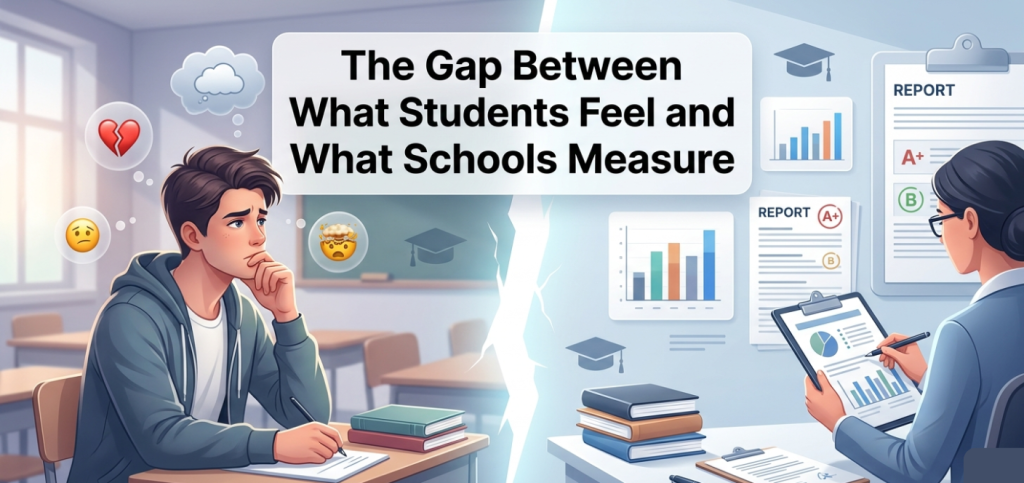
The Gap Between What Students Feel and What Schools Measure And Why It Matters
In many Indian schools there is a silent gap between what students feel inside and what schools actually measure. While report cards focus on marks attendance and performance students experience emotions like stress confusion curiosity and self doubt. This gap between feelings and measurements often goes unnoticed but it plays a major role in shaping a child’s confidence and future decisions.
Parents teachers and principals usually want the best for students. However when emotional experiences are ignored and only academic scores are tracked students may feel unseen or misunderstood. Understanding this gap is essential for building a healthier and more effective learning environment for students in Classes Eight to Ten.
What Schools Commonly Measure Today
Most schools in India follow a structured system where success is defined through measurable outcomes. These include:
- Exam scores and grades
- Attendance and punctuality
- Completion of assignments
- Participation in class activities
These indicators are important because they help track academic progress. But they only show one part of the student’s journey. They do not capture how a student feels while learning.
What Students Actually Feel in School
Students experience a wide range of emotions every day. Some feel excited about learning something new while others feel anxious about tests or expectations. These emotions influence how well they learn and perform.
- Fear of failure during exams
- Pressure to meet parent expectations
- Confusion about career choices
- Lack of confidence in their abilities
- Curiosity and interest in specific subjects
When these feelings are ignored students may lose motivation even if their marks look fine on paper.
Why This Gap Matters for Student Growth
The gap between what students feel and what schools measure affects learning in deep ways. A student who scores well but feels constant stress may eventually burn out. Another student who scores average but feels curious and confident may grow into a successful learner over time.
According to global education insights shared by OECD education research emotional wellbeing is strongly connected to academic success. Students learn better when they feel safe supported and understood.
Ignoring emotions can lead to:
- Reduced interest in learning
- Increased anxiety and stress
- Poor decision making about careers
- Lack of self awareness
Real Life Situation in Indian Families
In many Indian households marks are seen as the primary indicator of success. Parents often ask one simple question after exams How many marks did you get. While this question comes from care it can unintentionally ignore the child’s emotional experience.
For example a student may score high but feel constant pressure to maintain that performance. Another student may struggle with marks but have strong interest in creative fields. Without understanding these emotions parents may guide children in the wrong direction.
This is where awareness becomes important. When parents look beyond marks they can support their children more effectively.
How Schools Can Bridge the Gap
Schools can take simple steps to reduce the gap between feelings and measurements. It does not require major changes but a shift in perspective.
- Include emotional check ins during classes
- Encourage open conversations about stress and learning
- Train teachers to observe student behaviour beyond marks
- Create safe spaces for students to express concerns
When students feel heard they become more engaged and confident.

The Role of Teachers in Understanding Student Emotions
Teachers are the closest observers of student behaviour. They can notice small changes like reduced participation or sudden silence. These signs often reflect emotional struggles rather than lack of ability.
By focusing on both academic and emotional signals teachers can guide students more effectively. This approach builds trust and improves classroom relationships.
Simple Ways Teachers Can Support Students
- Ask students how they feel about their learning
- Give feedback that encourages effort not just results
- Recognize individual strengths
- Avoid comparing students with each other
How Career Counselling Helps Close the Gap
Career confusion is one of the biggest emotional challenges for students in Classes Eight to Ten. Many students feel lost because they do not understand their strengths or interests.
Structured tools like career assessment programs help students discover their abilities and preferences. These insights go beyond marks and focus on what students truly feel and enjoy.
Advanced solutions such as AI based learning insights can also help schools understand patterns in student behaviour and emotional responses.
Students can also explore guidance through interactive chat support and connect with career experts to make informed decisions.
Parents as Emotional Support Partners
Parents play a crucial role in reducing this gap. Small changes in communication can make a big difference.
- Ask children how they felt during exams not just their marks
- Encourage effort and learning instead of only results
- Listen without immediate judgement
- Support exploration of different career paths
When children feel safe sharing their emotions they develop confidence and clarity.
Link Between Emotional Awareness and Career Choices
Students who understand their feelings make better career decisions. They choose paths based on interest and strength rather than pressure.
Exploring different career options through platforms like career exploration tools helps students connect their emotions with real world opportunities.
This approach ensures long term satisfaction and success.
Why Schools Often Notice Problems Too Late
One of the biggest challenges in education is delayed recognition of student struggles. By the time marks drop or behaviour changes significantly the problem has already grown.
Understanding early emotional signals can prevent this. You can explore more about this issue in this detailed insight on delayed problem recognition.
Moving Towards a Balanced Education System
A balanced system values both performance and emotions. It measures success not only through marks but also through confidence curiosity and wellbeing.
When schools and families work together to understand students completely learning becomes more meaningful. Students feel supported not judged.
This shift is essential for preparing students for real life challenges where emotional intelligence matters as much as academic knowledge.
Final Thought for Parents and Educators
The gap between what students feel and what schools measure is real and it affects every child in some way. By paying attention to both emotions and performance we can create a stronger foundation for learning and growth.
What do you think matters more marks or mindset Share your thoughts with your school community and explore more insights to support students in the right way.