When Behaviour Becomes a Symptom What Schools Miss Behind Student Actions
In many Indian classrooms teachers and parents often focus on student behaviour as a problem to fix. A child who talks too much is labelled disruptive. A student who avoids homework is seen as careless. But what if these actions are not the real issue What if behaviour is actually a signal of something deeper
This research based article explores how behaviour becomes a symptom and what schools often miss behind student actions. For parents principals teachers and career counsellors especially for Classes Eight to Ten understanding this shift can change how we support children during their most critical learning years.
Understanding Behaviour as a Signal Not a Problem
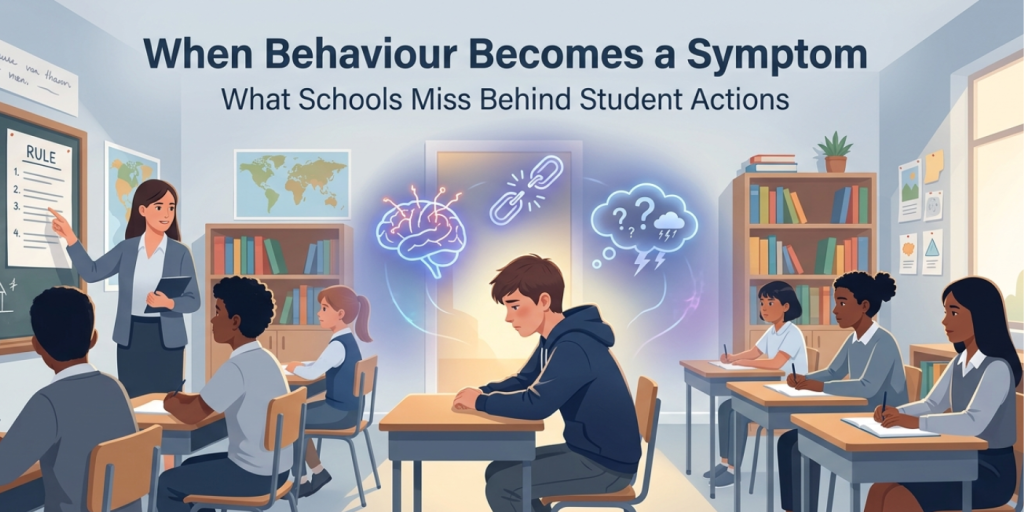
Every student behaviour tells a story. When a child suddenly becomes quiet or starts acting out it is rarely random. It is usually a response to something they are feeling but cannot express clearly.
When behaviour becomes a symptom it means the visible action is only the surface. The real cause lies underneath in emotional stress learning gaps or pressure from expectations.
- A student who interrupts may be struggling to understand concepts
- A child who avoids classwork may fear failure
- A quiet student may feel disconnected or anxious
Instead of asking what is wrong with the student the better question is what is happening inside the student
Why Schools Often Miss the Real Cause
Indian education systems are often focused on performance and discipline. Teachers manage large classrooms and strict timelines. This leaves very little space to explore emotional reasons behind behaviour.
As a result when behaviour becomes a symptom it is often treated as a rule breaking issue rather than a signal for support. This leads to quick solutions like warnings punishment or parent complaints which may control behaviour temporarily but do not solve the root cause.
According to research by American Psychological Association student behaviour is closely linked to emotional wellbeing and learning environment. Ignoring this connection can reduce student engagement and long term motivation.
Common Hidden Reasons Behind Student Behaviour
To understand when behaviour becomes a symptom we must look at what students are experiencing internally. Here are some common hidden factors seen in Classes Eight to Ten.
Academic Pressure and Fear of Failure
Students in middle school begin to feel pressure about exams and future streams. When they feel unprepared they may avoid tasks or act distracted. This is not laziness. It is fear.
Lack of Personal Attention
In large classrooms students may feel invisible. Some react by seeking attention through behaviour while others withdraw completely.
Emotional Stress at Home
Family expectations financial concerns or comparison with peers can affect mental wellbeing. Students may not express this directly but it shows in their actions.
Learning Style Mismatch
Not all students learn in the same way. When teaching methods do not match their style they lose interest or become restless.
Real Life Classroom Example
Consider a Class Nine student who constantly talks during lessons. Teachers may see this as indiscipline. But after deeper observation it may turn out the student does not understand the subject and uses talking as a distraction.
In another case a quiet student who never participates might actually feel afraid of giving wrong answers because of past criticism.
These examples show clearly that when behaviour becomes a symptom the real issue is hidden and requires attention not punishment.
Impact on Student Future and Career Choices
If these behaviour signals are ignored students carry confusion and low confidence into higher classes. This affects how they choose subjects and careers.
A student who feels weak in science due to lack of support may avoid STEM careers even if they had potential. A student who feels judged may avoid competitive opportunities.
Tools like student assessment platforms and AI based insights can help identify strengths and gaps early so behaviour is understood in context.
What Teachers Can Do Differently
Teachers are the first to notice behavioural changes. Small shifts in approach can make a big difference.
- Observe patterns instead of reacting instantly
- Have one on one conversations with students
- Create a safe space where mistakes are accepted
- Encourage questions without fear
When teachers see behaviour as communication students feel understood and supported.
Role of Parents in Understanding Behaviour
Parents often receive feedback only when something goes wrong. This can lead to stress and strict reactions at home. But when behaviour becomes a symptom parents need to look deeper.
- Ask children how they feel about school not just marks
- Avoid comparison with other students
- Encourage open conversation without judgement
- Work with teachers as partners
This approach builds trust and helps children express what they are going through.
How Schools Can Build Better Support Systems
Schools can create systems that go beyond discipline and focus on understanding behaviour.
- Regular emotional check ins with students
- Training teachers to identify behaviour signals
- Using digital tools to track student progress
- Providing access to career and emotional guidance
Solutions like AI chat support for students and guidance from career experts reduce the burden on teachers and give students a safe outlet.
Link Between Behaviour and Learning Experience
When behaviour becomes a symptom it often reflects how students experience learning. If learning feels confusing or stressful behaviour changes naturally.
A deeper understanding of learning systems can be explored in this detailed explanation on learning absorption. It highlights how engagement and understanding shape student actions.
Why Early Awareness Matters
The earlier we recognise behaviour as a signal the easier it is to guide students. Classes Eight to Ten are a turning point where identity confidence and career thinking begin to form.
Ignoring these signals can lead to long term disengagement. Addressing them can unlock hidden potential.
Moving From Reaction to Understanding
Education systems need a shift from controlling behaviour to understanding behaviour. This requires patience observation and collaboration between parents teachers and counsellors.
When behaviour becomes a symptom it is an opportunity to listen more closely. Instead of asking how to stop this behaviour we should ask what this behaviour is trying to say.
This simple change in perspective can transform classrooms into supportive environments where students feel seen valued and motivated.
Have you noticed behaviour changes in students that may be hiding deeper concerns Share your thoughts with other parents and educators and explore more insights to build a supportive learning environment for every child.