

A Class 9 student has marks that point one way, parents who point another, and a subject form that needs signing today. In that moment, the central question is not which career sounds impressive. It is what happens after a psychometric test for career counselling produces a report that may agree with marks, or may complicate them.
That is where many families get stuck. They expect a test to name the right profession, while counselling often needs the student to compare evidence, context, and options before any stream or course choice makes sense. A report is useful, but only if it becomes a starting point for discussion, not a label pasted onto a child.

Table of Contents
- Why Students Still Feel Unsure About Their Future
- What a Psychometric Test for Career Counselling Actually Measures
- How to Read Reliability and Validity in Student Assessments
- Common Psychometric Assessment Types Used in Schools
- Real School Implementation at Scale
- Turning Assessment Results Into Clear Next Steps
- The Hidden Gap After Receiving a Psychometric Report
- Key Takeaways for Educators and Counsellors
Why Students Still Feel Unsure About Their Future
A student in Class 10 can have decent marks and still feel lost. One parent wants science, a teacher suggests commerce, and the student keeps asking which choice will leave the fewest regrets. That confusion is not a failure of character, it is the normal result of making a high-stakes decision with limited experience and too little structured guidance.
India's scale makes that problem harder, not easier. One sector estimate cited in an education report placed the country at roughly 350 million students and about 1.4 million career counsellors needed for adequate support, while another estimate put trained counsellors at about 100,000 for roughly 315 million students, with around 1.5 million needed for an adequate ratio (JETIR report). Those figures are estimates, not a census, but they show why many students receive fragments of advice rather than steady guidance.
Why a label is not a plan
A report that says “you fit engineering” can feel decisive, yet it often misses the practical question of readiness. Does the student enjoy the kind of work involved, have the marks to sustain the path, and have access to the right subjects and support at home? Those details decide whether a suggestion is realistic.
A useful report reduces confusion, it doesn't pretend to remove all uncertainty.
That is why psychometric testing belongs inside counselling, not above it. The test can organise the conversation, but the student still needs a plan that accounts for family expectations, finances, school pathways, and changing interests. The value lies in turning vague fear into a sequence of decisions that can be checked.
What a Psychometric Test for Career Counselling Actually Measures
A strong psychometric test for career counselling does not guess a child's future from one score. It separates different parts of the decision so that educators can see what a student prefers, what the student can do, and how the student tends to work. A good way to think about it is as a compass, not a map. A compass points in a direction, but it does not draw the road, the traffic, or the detours.
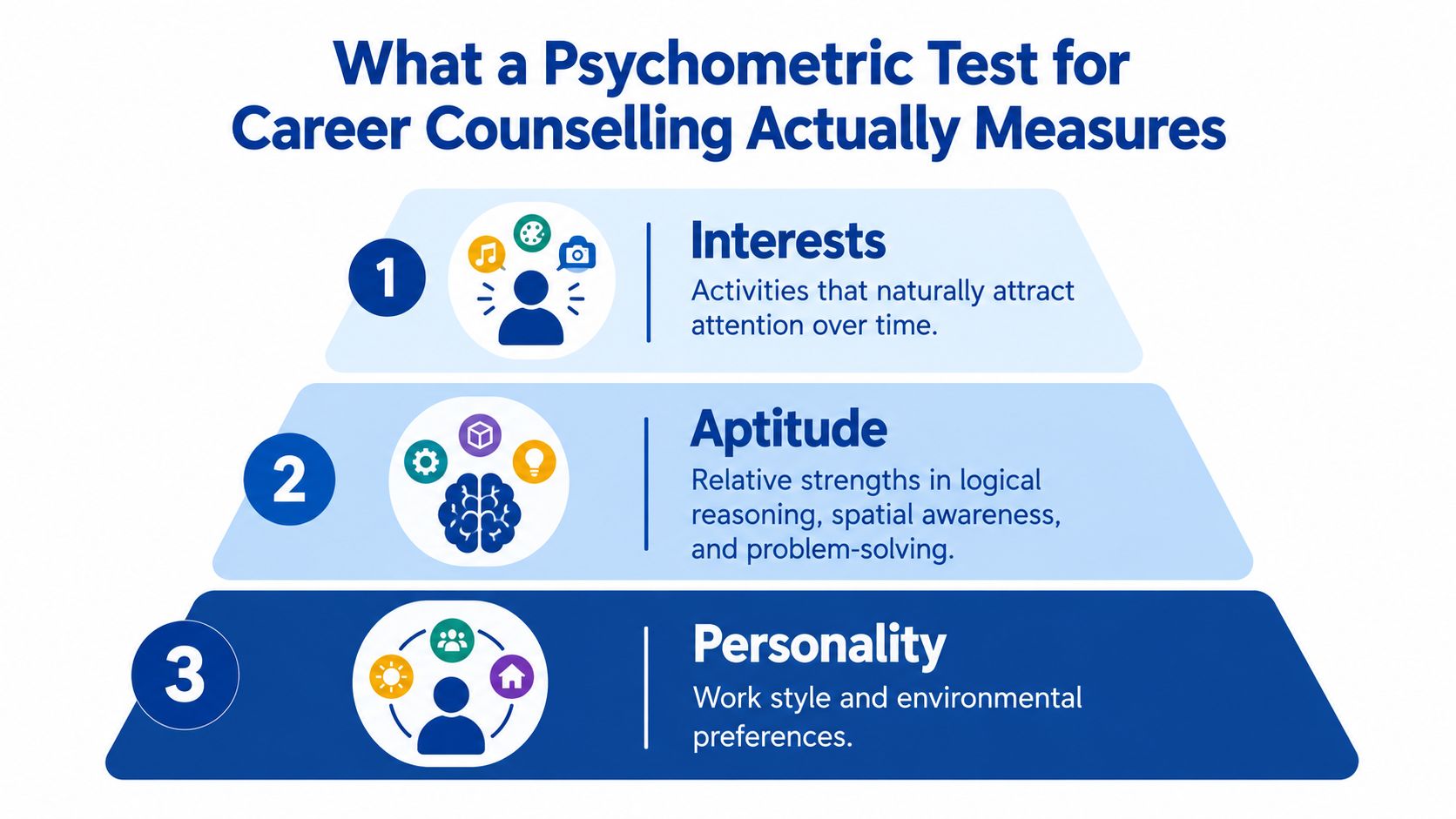
The three domains that matter most
Interest shows what kinds of activities attract attention over time. A student who keeps returning to design, biology, or public speaking may show a pattern worth exploring, even if marks alone do not reveal it. This is why many counsellors start by looking for repeated attraction rather than a single classroom mood.
Aptitude is different. It points to relative strengths in reasoning, problem-solving, numerical work, spatial understanding, or verbal processing. India's National Career Service separates interest assessment from cognitive assessment, and its cognitive tools cover problem-solving, verbal reasoning, numerical reasoning, and spatial ability (NCS newsletter). That separation matters because liking something and performing well in it are related, but not identical.
Personality adds work-style and environment preferences. Some students like structure, others prefer variety. Some work best in quiet individual tasks, others do better in collaborative settings. For educators who want a deeper guide to this layer, how Synopsix predicts behaviour gives a useful overview of how testing frameworks often combine traits and patterns.
How to read the report sensibly
The right interpretation is layered. Interest can suggest what a student may stick with, aptitude can indicate what is likely to be manageable, and personality can show where a student may feel comfortable. A report should not collapse all three into a single verdict.
For schools and counselling teams, that means the report is best used to generate hypotheses. A student with strong investigative interest and strong numerical reasoning might explore quantitative science pathways, but that still needs marks, subject access, and family context to be checked. A personality profile alone cannot do that work, which is why this guide on personality assessment and student career guidance sits well alongside broader counselling practice.
How to Read Reliability and Validity in Student Assessments
Why do some student reports look convincing and still fail in practice? Because a tidy report is not the same as a trustworthy one. A career assessment should stay reasonably consistent, measure what it claims to measure, and use norms that fit the student in front of the counsellor.
What consistency should look like
A study of a 121-item Career Preference Inventory standardised on 300 secondary students reported test-retest reliability of 0.83 after 15 days and 0.77 after 30 days, which points to good but not perfect stability (study on the Career Preference Inventory). In classroom terms, if a student retakes an interest test a few weeks later, the main areas should usually remain similar unless something meaningful has changed.
The same study reported criterion-related validity of 0.723 against one established career-preference measure and 0.738 against another, with inter-item correlations across 11 interest fields ranging from 0.165 to 0.574. These figures show that a test can be useful without being absolute. It can support guidance, but it cannot carry the full counselling decision on its own.
Practical rule: if a score changes sharply, ask why before changing the student's direction.
What to check before trusting the output
A school-level review should ask four questions.
- Does the student understand the language of the items?
- Was the student rushed or tired?
- Does the norm group resemble the student's age, schooling context, and region?
- Do the results make sense alongside marks and classroom behaviour?
That last question matters most in practice. A large score shift should lead the counsellor to check comprehension, response effort, language, mood, or real developmental change before suggesting a new path. Results are easier to use when they are shown as ranked patterns or norm-referenced outputs such as percentiles or stanines, because raw totals can look more exact than they really are. The goal is interpretation that matches the student's school record, not a report that sounds final just because it is numerical.
Common Psychometric Assessment Types Used in Schools
Schools usually meet four broad types of assessment, and each answers a different question. The confusion starts when one tool is expected to do the work of all four. That is when students receive neat-looking reports that still fail to explain what to choose after Class 10 or Class 12.
| Assessment type | What it measures | Best counselling use | Main limitation |
|---|---|---|---|
| Interest inventory | Preferred activities and themes | Helps identify likely streams, clusters, and careers to explore | It does not prove the student can perform well in that field |
| Aptitude battery | Reasoning, problem-solving, verbal, numerical, spatial strengths | Useful for checking fit with demanding academic pathways | It does not reveal motivation or values |
| Personality-style questionnaire | Work style, environment preference, behavioural tendencies | Helpful for discussing learning and workplace fit | It should not be used alone to assign careers |
| Integrated career assessment | More than one domain in a single profile | Stronger basis for stream and course conversations | Still needs counselling and context to avoid overreading |
The biggest practical difference is between screening and counselling-grade use. A quick screening tool can help narrow possibilities, but a counselling-grade instrument should support a conversation about fit, risks, and alternatives. For students comparing options, this interest test resource is useful because it shows why interest data is only one part of the picture.
Why multiple measures reduce bias
A single-interest snapshot can be misleading if a student is stressed, tired, or trying to please adults. An integrated profile gives the educator more than one angle, which reduces the chance of making a decision from one weak signal. That does not make the report perfect, but it does make it more usable.
Multi-domain profiles are safer for stream choices than any single score.
This is also where implementation matters. In school settings, a test should not be treated as a standalone judgement. It should sit alongside marks, subject availability, family constraints, and a conversation about what the student is willing to try next.
Real School Implementation at Scale
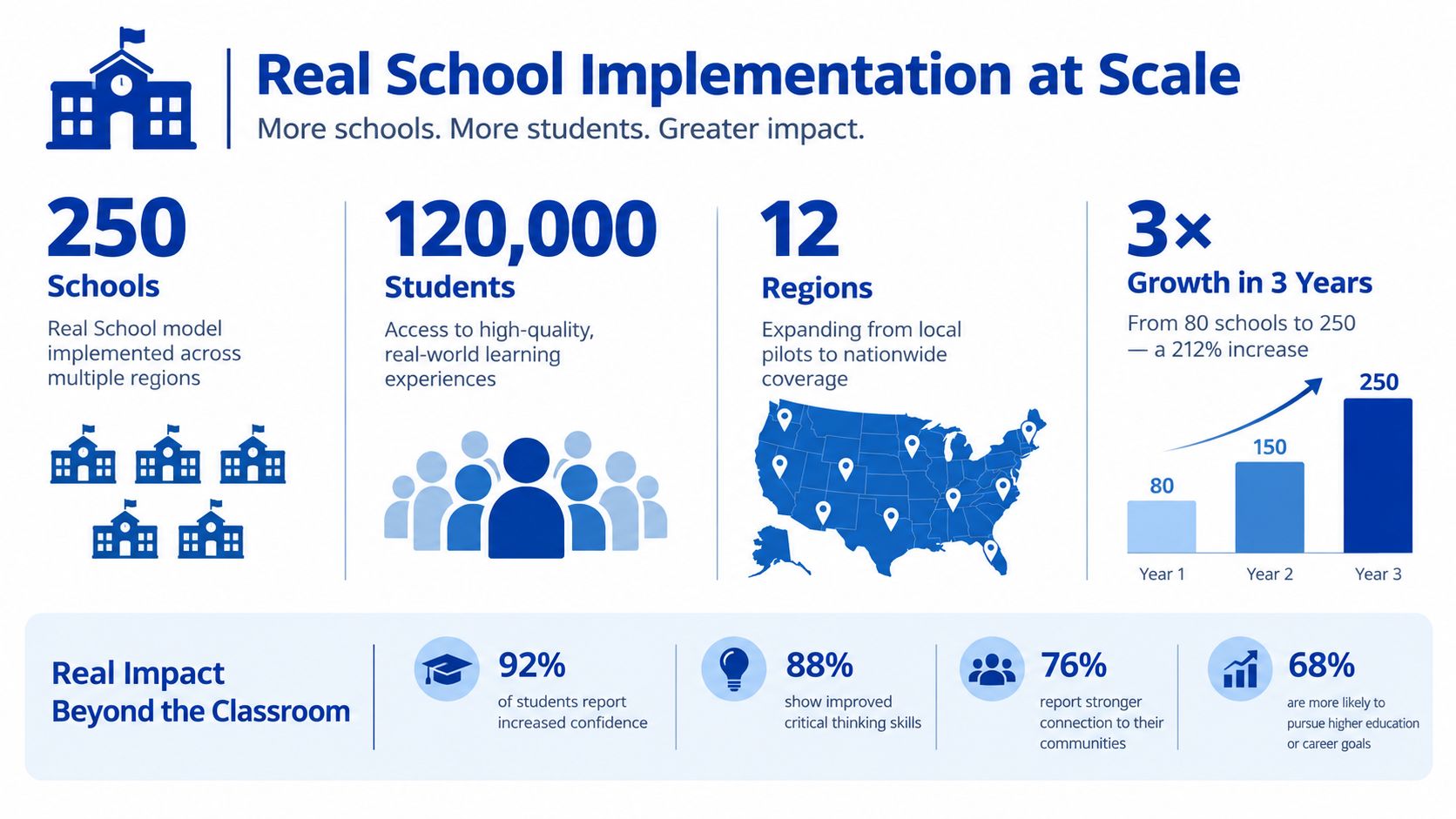
Large-scale rollout shows that psychometric assessment is not limited to one-to-one counselling rooms. In Maharashtra, a government-linked programme reportedly covered 1,866 schools across 34 districts and reached about 200,000 students in Classes 9 to 12 over one year (Maharashtra programme presentation). The model assessed interest, aptitude, and personality, and generated career options from a pool of more than 300 occupations.
What the rollout does and does not prove
The reported completion rate was about 80%, with a near-even split of 49% male and 51% female students, and most participants coming from Class 9 and Class 10. That suggests structured or digital formats can reach large student groups. It does not prove stronger decisions, better fit, or long-term outcomes.
For educators, this distinction matters. Completion shows that the process ran. It does not show whether students understood the report, whether parents accepted the suggestion, or whether the recommended path fit the family's budget and timetable. A school can process many assessments and still miss the true counselling moment if interpretation is thin.
The follow-up step matters as much as the report itself. A student may need marks, subject options, family context, and a small trial activity before any career direction feels credible.
For teams that think in terms of workflow, what test prep center owners use is a helpful comparison point, because large student systems often rely on structured intake, tracking, and follow-through rather than a one-off interaction.
The lesson for schools
Scale works only when assessment is structured, repeatable, and tied to a follow-up process. Schools need a path from profile to conversation to action, or the report becomes another document filed and forgotten.
Turning Assessment Results Into Clear Next Steps
The most useful career report does not end with a verdict. It ends with experiments. That is the point students and parents often miss, especially when the report conflicts with marks, a family expectation, or a long-held ambition.
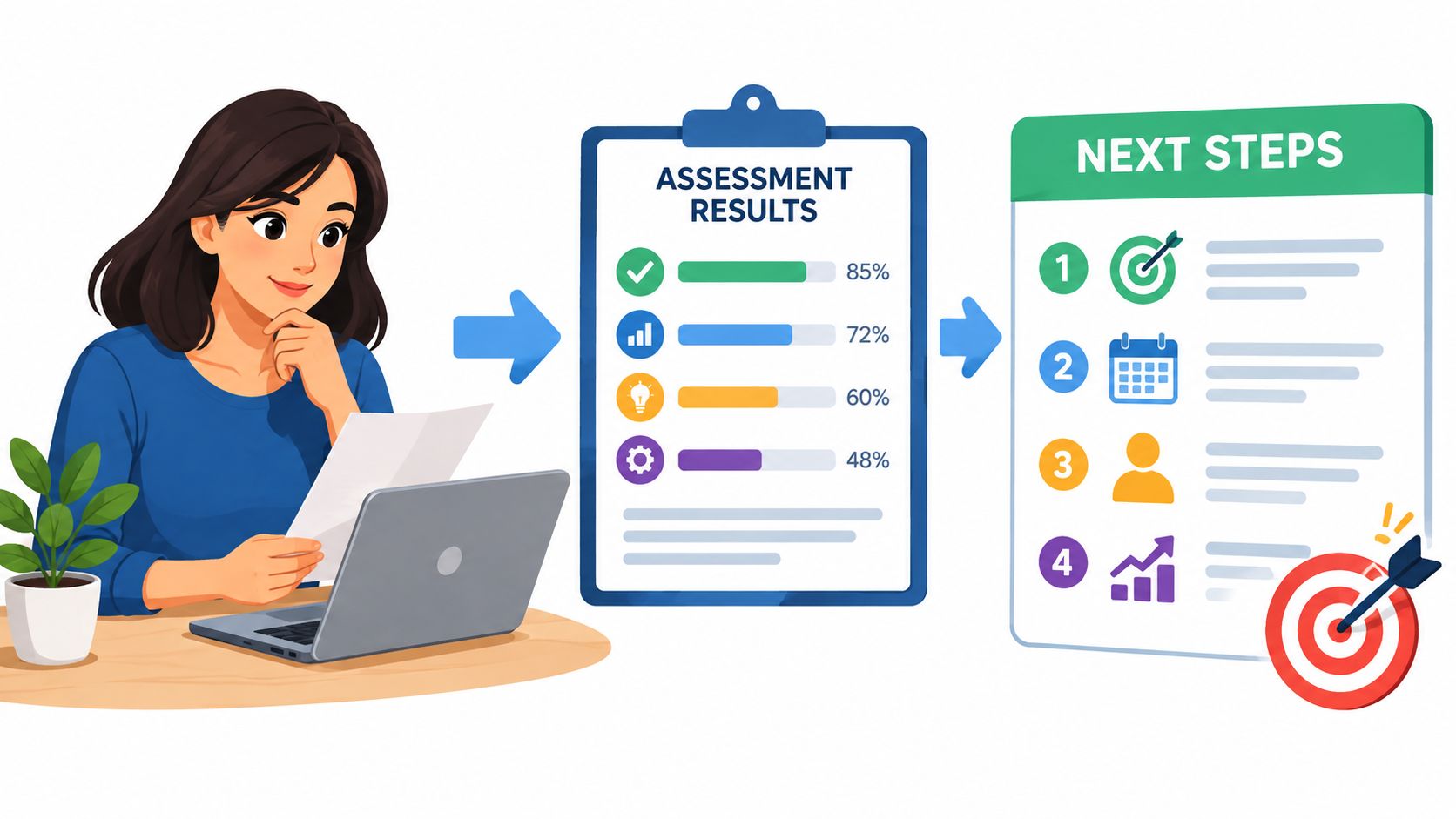
From score pattern to small trial
A counsellor can help a student turn a result into three practical questions. What subjects should be sampled more seriously, what career conversations should happen next, and what low-risk activity could test the fit. That could mean a subject project, a short course, a career interview, or job shadowing for a day.
The logic is simple. If a student shows strong fit with one direction but doubts the lifestyle attached to it, a low-cost trial is better than a premature commitment. If the report and the marks point in different directions, the conflict is not a failure. It is a signal that more evidence is needed.
A report should open a shortlist, not close a conversation.
When the report clashes with family or finances
Many families get stuck at this point. Parents may focus on prestige, while the student focuses on enjoyment, or the other way round. A good counsellor does not ignore either side. The report needs to be discussed against practical realities such as subject availability, affordability, and emotional wellbeing.
One useful framework is to treat the result as a hypothesis with a confidence band rather than a final label. If the evidence is mixed, the student can compare a few plausible pathways instead of being pushed into one. For a structured model that turns assessment into action, this guide on moving from data to direction fits naturally here.
The Edvdo platform is one option in that kind of workflow, because it combines assessment, guided reflection, and follow-up support around student decision-making. Used well, that sort of setup can keep the report connected to the next step instead of leaving it as a static result.
When to escalate
Some situations need a human counsellor without delay. If the student is distressed, confused by language, under strong parental pressure, or blocked by disability, money, or local access, the report should be reviewed in person. In those cases, testing supports counselling, it does not replace it.
The Hidden Gap After Receiving a Psychometric Report
What should happen after a psychometric report lands on a desk? For many students, that is the point where the real work begins. The 2025 Bharat Career Aspirations Report coverage covered 21,239 students in Classes 9 to 12 across 115 schools in 14 districts. It found that only 10.4% had received professional career guidance, while 81% faced barriers to career decisions.
The same report found that 41% of private-school students were unsure which course to choose, 22% of all students had a backup career plan, and 10% knew course costs. Those figures matter because they show how often a report arrives before clarity does. A psychometric test can add useful evidence, but evidence alone does not settle a student's next move.
What needs to happen after the report
Students need interpretation, options, affordability checks, and a follow-up that happens on a clear timetable. They also need room to keep testing their thinking. Schools get better results when they combine the report with marks, family context, and a small set of low-risk experiments, such as a subject visit, a shadowing conversation, or a sample task linked to the student's strongest pattern.
That approach also helps teachers and counsellors avoid treating one assessment as the whole answer. A strong workflow uses the report as one input, then checks whether the pattern holds against classroom performance and the realities at home. If those signals do not align, the next step is a guided review, not a forced decision.
Schools should schedule that follow-up within two to three weeks of report delivery. The meeting should cover interpretation, affordability, and one practical trial the student will complete before the next discussion.
Key Takeaways for Educators and Counsellors
A Class 10 student with mixed signals does not need a dramatic answer. The student needs a calm process. The report should be read alongside marks, home context, and the choices currently available in the school and local area.
The safest approach is steady and simple. Treat interest, aptitude, and personality as separate clues. Check whether the pattern remains broadly stable. Compare it with academic records and family realities. Then ask the student to try something low-risk before locking in a path.
A good psychometric test for career counselling helps adults ask better questions. It can show where a student is drawn, where the student is capable, and where the student may need support. It cannot, by itself, settle every decision, especially when money, language, wellbeing, or parental pressure are part of the picture.
That is why good counselling stays human. The report starts the conversation, but the next step should be a guided experiment, not a rushed label. When schools get that sequence right, students stop chasing a single perfect answer and start building a choice they can actually own.
Edvdo helps students and educators move from assessment to action with structured career insights, reflection prompts, and follow-up guidance around subject and stream decisions. For schools and counsellors working with uncertain students, Edvdo offers a practical place to begin that conversation and keep it going.