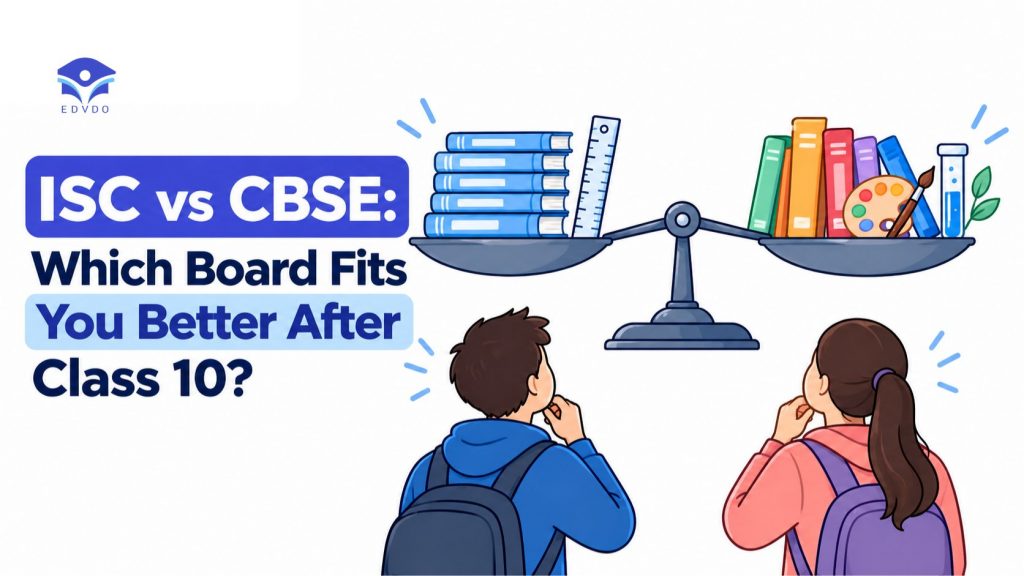
Stop asking which board is harder. That single question has misled more Class 10 families than any syllabus difference ever will. A board can look tougher on paper and still suit a student perfectly, while a supposedly easier board can punish the wrong learning habits for two full years. The ISC vs CBSE decision isn't a difficulty ranking. It's a fit decision involving learning pattern, school delivery, and the destination after Class 12.
Table of Contents
- Why the ISC vs CBSE Question Is Usually Asked the Wrong Way
- Scale, Reach, and Institutional Background of Both Boards
- How CBSE Assesses You in Class 10 and Class 12
- How ISC Assesses You Across Class 11 and Class 12
- Subjects, Electives, and Language Policies Side by Side
- College Recognition and What Happens After Class 12
- Which Board Fits Which Student Profile
- A Practical Checklist Before You Lock In a Board
Why the ISC vs CBSE Question Is Usually Asked the Wrong Way
Most comparison articles start with labels. ISC gets called analytical and detailed. CBSE gets called concise and entrance aligned. Those labels sound decisive, but they collapse board design, school teaching, subject choice, and exam execution into one vague verdict that helps nobody choose a school.
The numbers expose the problem. A Ministry of Education compilation for the 2018 examinations recorded a 98.60% pass rate for ISC Class XII and 90.82% for CBSE Class XII, a gap of 7.78 percentage points. Families often read that gap as proof that one board is easier or better. It proves neither, because the boards differ in school composition, candidate selection, assessment design, and participation.
Scale changes the meaning again. That same dataset had 1,594,080 CBSE Class XII candidates against 183,037 ISC Class XII candidates, making CBSE approximately 8.7 times larger. A national system of that size and a smaller, concentrated system shouldn't be judged by one aggregate percentage. They're different ecosystems with different peer pools and different pressures.
The Four Inputs That Actually Matter
- Learning pattern: Sustained reading and written expression point one way. Comfort with standardised, examination oriented structure points another.
- Target pathway: JEE, NEET, CUET, liberal arts, and overseas applications reward different preparation habits.
- School implementation: Teacher expertise, laboratories, internal assessment support, and real subject availability matter more than a brochure claim.
- Transferability: Families likely to move cities need a board and school network that travels well.
The blunt rule: Board choice predicts less than the interaction between student strengths, school implementation, and target pathway.
A student who hasn't mapped those four inputs isn't ready to pick a board. That's why an evidence based starting point, such as a structured interest test for stream and subject direction, belongs before school shortlisting, not after admission. Interest alone won't settle the ISC vs CBSE question, but it stops families choosing a board for a career direction the student doesn't want. Difficulty is the last question. Fit is the first.
Scale, Reach, and Institutional Background of Both Boards
CBSE is a national board administered under the Union education system. Its official examination statistics portal for Class X and Class XII reflects that national footprint. ISC is conducted by the Council for the Indian School Certificate Examinations, known as CISCE, for a smaller candidate population concentrated in CISCE affiliated schools.
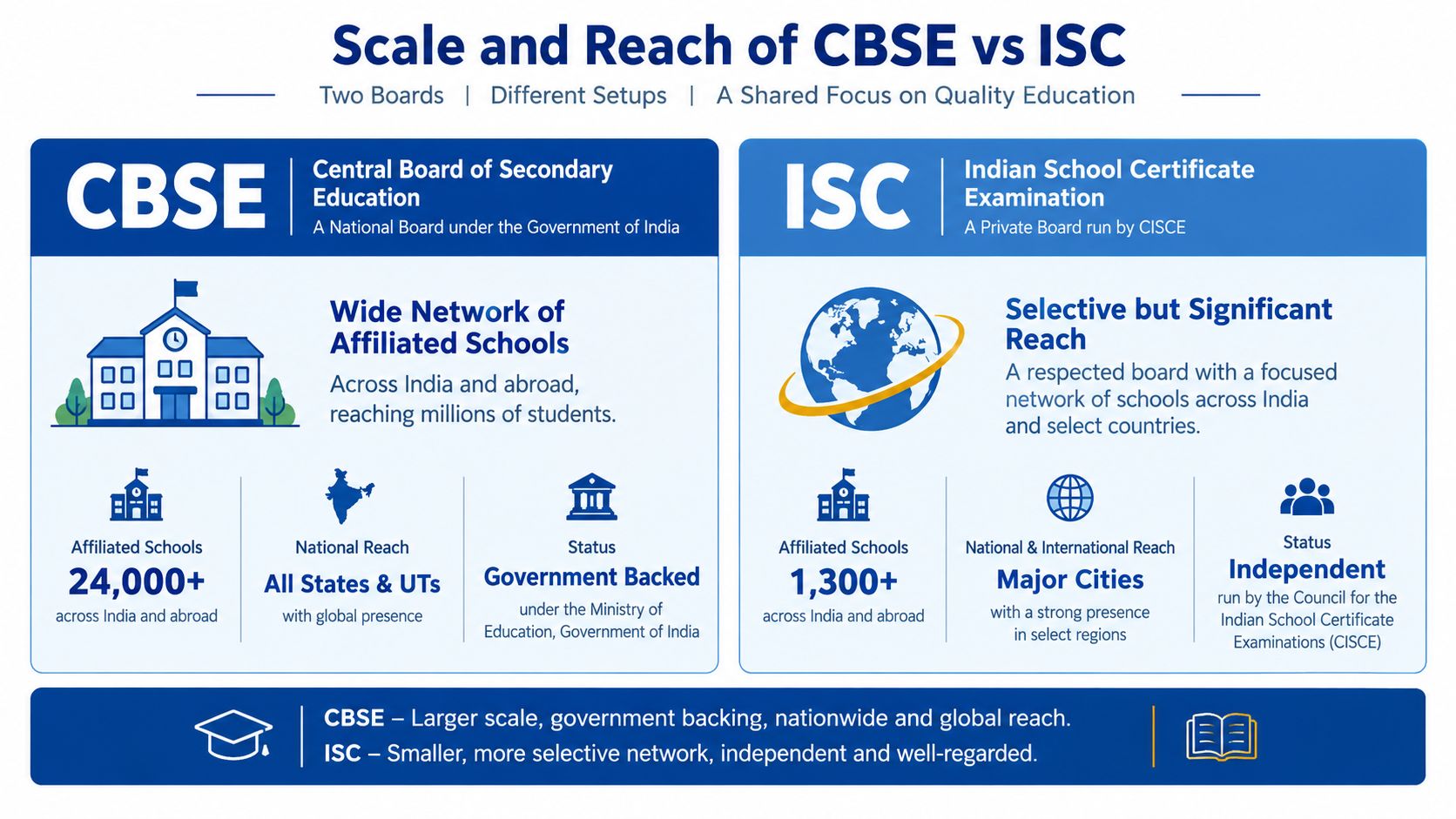
That scale gap has practical consequences families feel immediately. CBSE generally offers broader school availability and easier transfer options if a family relocates. ISC availability depends far more on whether strong CISCE schools operate in the family's city and neighbourhood. A theoretically ideal board with no good local school isn't an ideal choice at all.
History in Brief
CISCE was established in 1958. CBSE traces its institutional predecessor to 1921, then developed into its present national form after post independence restructuring. History doesn't determine quality, but it explains the design philosophies. One board grew as a large, standardised national system. The other serves a more contained, English medium school network.
Why More Students and Higher Pass Rate Are Different Claims
- Candidate volume describes reach, peer benchmarking, and the volume of public examination data.
- Pass percentage describes aggregate success within a specific candidate population.
- Successful candidates in absolute terms tell yet another story, since a huge board produces far more successful students even at a lower percentage.
Conflating those measures leads to sloppy advice. A higher board level pass rate doesn't mean every subject in that board is easier. A larger candidate pool doesn't mean teaching in a particular school is stronger. For ISC vs CBSE, scale should inform questions about portability, school choice, and benchmarking. It shouldn't be dressed up as a verdict on academic standards in a specific classroom. That verdict requires visiting the school and checking delivery.
How CBSE Assesses You in Class 10 and Class 12
CBSE's structure is centrally specified, and that precision is its defining feature. Families can map school work against defined syllabi, learning outcomes, and assessment components with relatively little guesswork. For students who thrive on clear boundaries, that clarity is a genuine advantage.
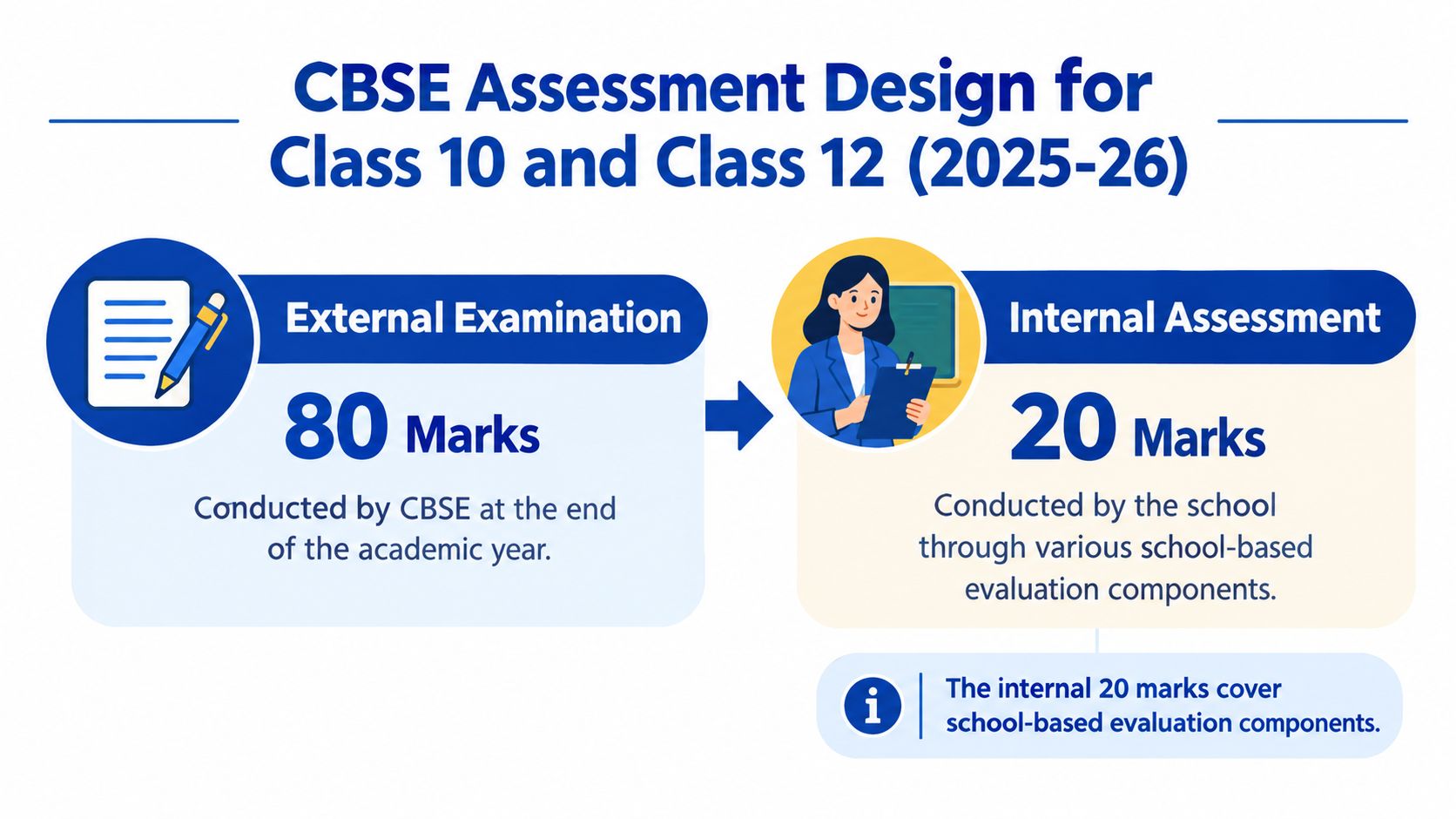
At Class X, the CBSE senior secondary curriculum framework for 2025 to 26 sits within a system using an 80 mark external examination plus 20 marks of internal assessment. Students must achieve 33% in each component. At Class XII, the framework combines theory, internal assessment, and practical components according to each subject syllabus, with elective subject grades awarded on a nine point scale.
What the 80 and 20 Split Really Means
Internal marks can't rescue a weak board paper. Because each component must be cleared independently at Class X, a student who coasts through school assessments and hopes internal marks will compensate has misunderstood the design. Timed paper execution remains non negotiable. Schools that don't train that skill leave students exposed, regardless of how polished project work looks.
A CBSE profile should never be read as one percentage. Exam execution, practical performance, internal consistency, and competency application are separate signals, and each one points to a different intervention.
The Competency Shift Families Underestimate
CBSE's official curriculum directs schools toward experiential, competency based, and interdisciplinary learning across Classes IX to XII, with specified learning outcomes and pedagogical practices. That matters for career guidance. High marks alone don't prove readiness for a field. A student strong in applied tasks but inconsistent under timed conditions needs practice design, not more content.
For entrance focused students, the appeal is alignment. A tightly specified syllabus lets school preparation and national entrance preparation sit closer together, reducing duplicated effort. The risk runs in the opposite direction. Students who need extended writing, broader reading, or a heavier elective mix to stay engaged may find a standardised structure narrow. In the ISC vs CBSE comparison, CBSE assessment rewards disciplined execution inside a defined framework. Students who dislike that framework rarely fix the mismatch with extra tuition.
How ISC Assesses You Across Class 11 and Class 12
ISC is a two year Class XI to XII course conducted in English after the Class X stage. The CISCE ISC regulations for the examination require English plus three, four, or five elective subjects. CISCE also requires internal evaluation in Socially Useful Productive Work and Community Service, often shortened to SUPW.
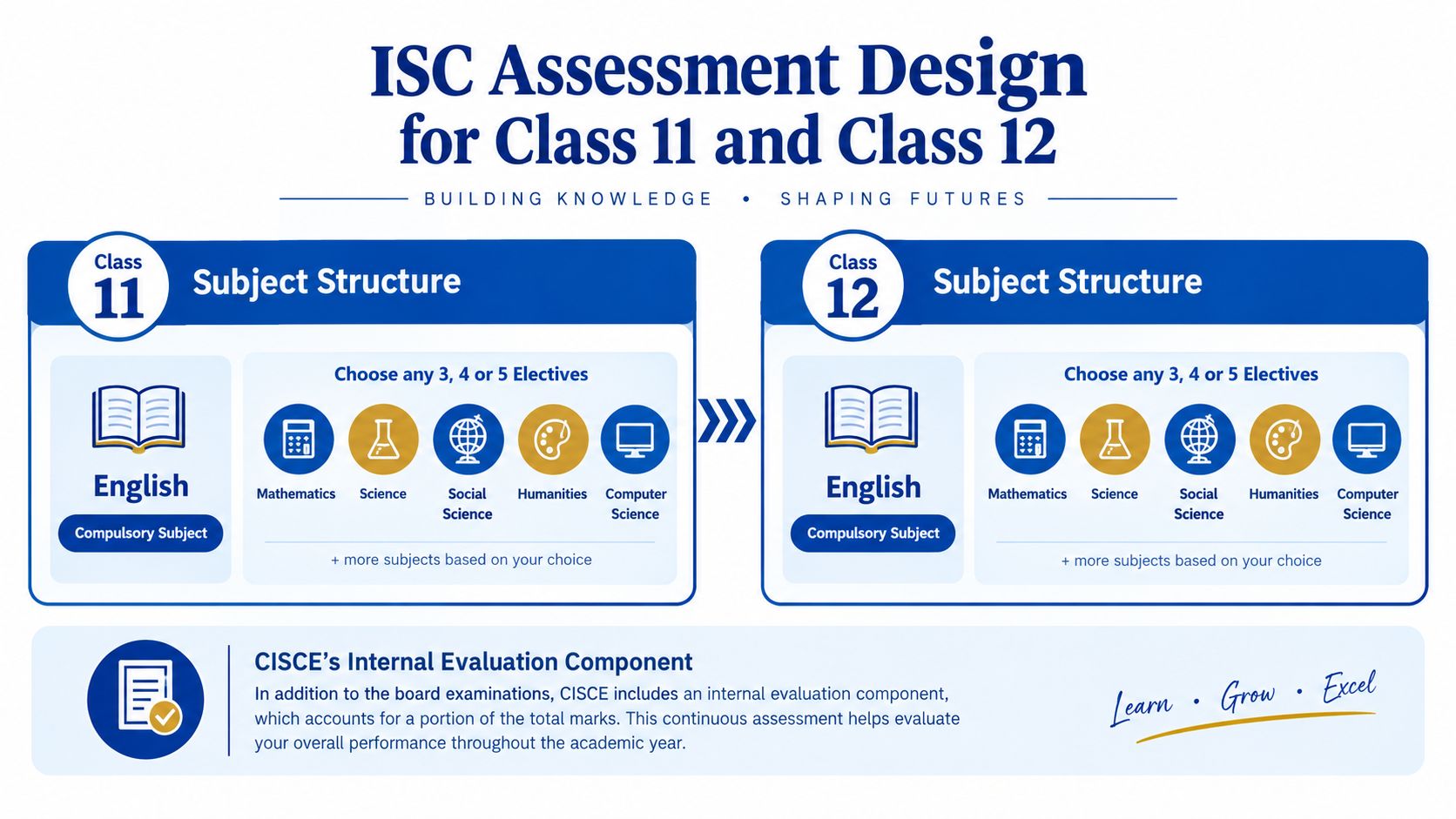
That structure creates a wider load than many families expect. A student carries compulsory English, multiple electives, practical or coursework demands where subjects require them, and a non academic internal component. None of that is bad. All of it requires planning from the first term of Class XI, not a rescue plan in Class XII.
Subject Combination Is the Real Pressure Point
CISCE states that standards are assessed through performance in the different subject papers, and evaluation of answer scripts remains under the Council's jurisdiction. Performance is therefore subject specific, not a single difficulty score. A learner can handle analytical science comfortably while struggling with English composition, humanities writing, or practical work.
- Paper by paper marks show where marks are being lost.
- Written expression indicators reveal whether English demands will support or strain the overall result.
- Practical competence needs tracking separately from theory confidence.
- Tolerance for elective load determines whether breadth becomes an asset or a drain.
Where ISC Students Get Caught Out
The common failure isn't intelligence. It's sequencing. Students choose an ambitious combination for prestige, discover the weekly writing and coursework load too late, then spread effort thinly across every paper. Early guidance on combinations, followed by periodic checks on language, practical work, and elective performance, prevents that slide.
For ISC vs CBSE, ISC suits students who can sustain performance across more fronts and who benefit from depth and extended writing. It penalises disorganised students more gradually than CBSE does, because workload debt accumulates across subjects before board papers expose it. Families should judge readiness by current work habits, not by a promise that habits will improve after admission.
Subjects, Electives, and Language Policies Side by Side
Subject architecture shapes daily life more than board reputation does. Timetables, reading load, laboratory time, and language confidence decide whether a student settles or struggles. A tight comparison makes those trade offs visible.
ISC vs CBSE at a Glance
| Dimension | CBSE | ISC |
|---|---|---|
| Governing design | National, centrally specified syllabi and assessment framework | CISCE regulated two year course with Council controlled evaluation |
| Language emphasis | English important within a standardised national structure | English compulsory and central to the course identity |
| Elective structure | Subject combinations within a defined national framework | English plus three, four, or five electives |
| Internal components | Internal assessment and practicals defined subject by subject | Internal evaluation including SUPW and Community Service |
| Assessment feel | Standardised outcomes with competency based direction | Broader portfolio with sustained written and coursework demands |
| Transfer practicality | Stronger national portability through scale | More dependent on local CISCE school availability |
Reading the Table as a Student Decision
A humanities leaning student who writes willingly and wants breadth across electives will read the ISC column as opportunity. The same column reads as risk for a student whose English writing is fragile and whose marks depend on narrowing focus. Neither reaction is wrong. The table only becomes useful when matched to a specific learner.
Science students need a different check. Laboratory quality, practical supervision, and whether the school staffs the desired combination well outweigh board level claims about depth. A school can list an attractive elective and still teach it poorly. Families should verify combinations with a tool such as a subject test for Class 11 combination clarity and then confirm the school timetable in writing.
Admissions warning: A subject printed in a prospectus is not a subject guaranteed to run. Enrolment thresholds and teacher availability cancel combinations every year.
Language policy deserves the same hard look. ISC is conducted in English, and compulsory English carries real weight in workload and confidence. CBSE's standardised structure can feel more predictable for students who prefer clearly bounded syllabi. In ISC vs CBSE, breadth only helps students with the stamina and language base to use it.
College Recognition and What Happens After Class 12
Both boards are recognised. That sentence is true and almost useless. Recognition answers whether a certificate is accepted. It doesn't answer how a student competes for a specific seat, which subjects must be present, or how much friction preparation will involve.
Pathway Fit Beats Board Prestige
- JEE and NEET direction: A standardised CBSE structure can reduce friction for students whose main goal is alignment with national entrance preparation.
- CUET and central universities: Subject wise eligibility and entrance performance matter more than board label, so combination choice must match target programmes.
- State universities: Local eligibility rules and subject prerequisites need checking early, not after Class 12 results.
- Liberal arts and humanities: Depth, extended writing, and elective breadth can support students who use those strengths.
- Overseas applications: Subject rigour, transcripts, and school documentation need planning alongside board performance.
None of those pathways makes one board universally superior. A broader ISC curriculum helps a student who benefits from depth and writing. It doesn't compensate for a missing prerequisite subject. A CBSE route helps a student chasing direct entrance alignment. It doesn't guarantee entrance rank without execution. Families treating recognition as strategy end up with a valid certificate and a weak application plan.
Post Result Processes Are Part of Planning
CBSE's official examination circulars and result procedure updates cover ongoing administration changes, including 2025 result procedures, implementation of APAAR as a student identifier, answer book photocopying, and re evaluation facilities. Those details sound bureaucratic until a student needs a document, a review, or a corrected record under an admission deadline. Organised families track them early.
Direction changes also need a contingency. Students who switch ambition after Class 10 need fallback subject eligibility, not reassurance. A structured career report linking subjects to courses and roles helps map prerequisites and alternatives before combinations harden. In ISC vs CBSE, the winning question is simple. Which board, in a specific school, keeps the intended destination and a credible backup open at the lowest preparation cost?
Which Board Fits Which Student Profile
No single verdict survives contact with real students. Four common profiles show why.
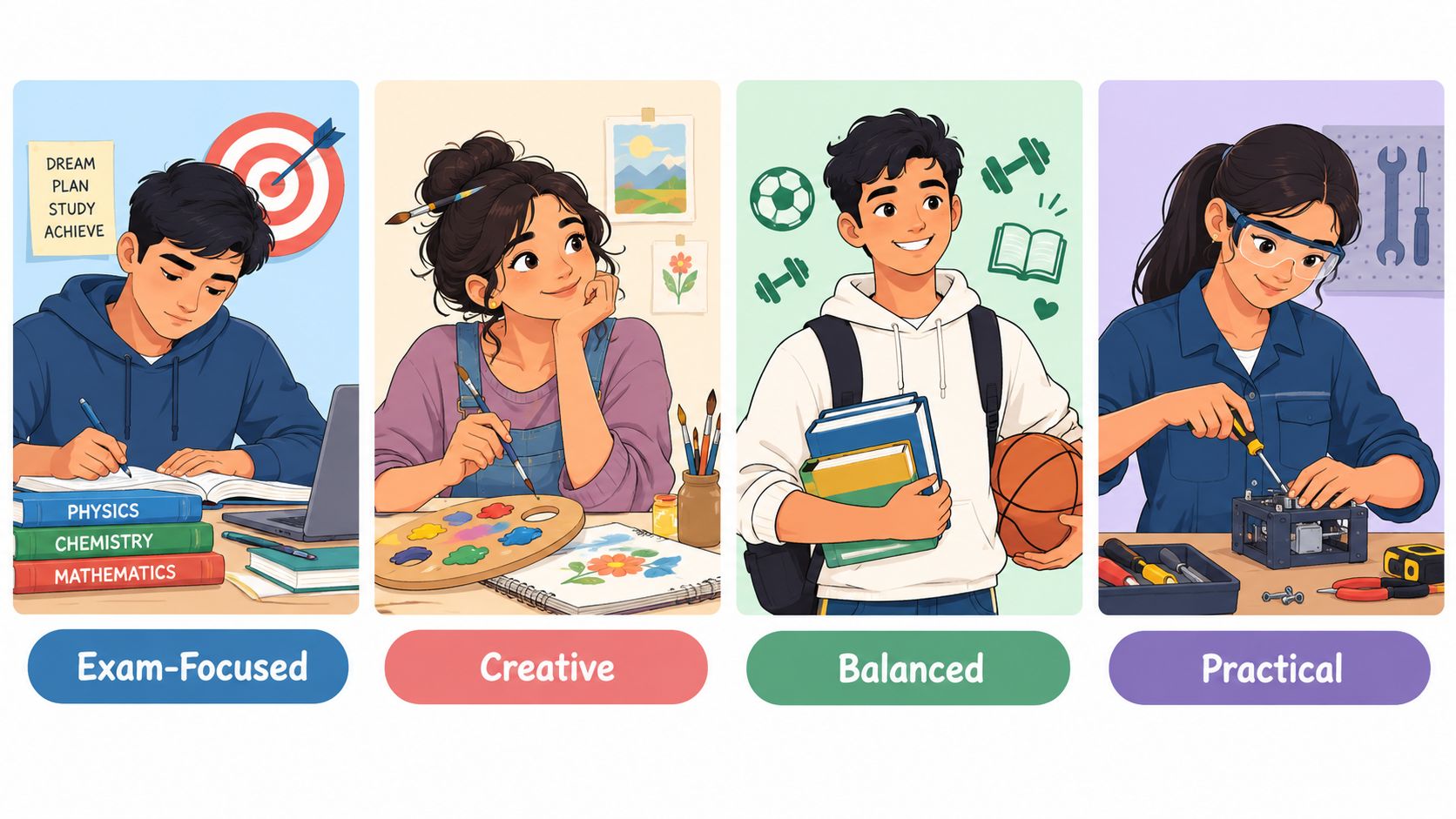
The entrance exam focused learner usually fits CBSE better. A standardised syllabus and clearly specified assessment reduce duplication between school and entrance preparation, provided the school doesn't force a timetable that crowds out practice. The humanities or liberal arts student with strong English and appetite for reading often gains more from ISC breadth and sustained writing, provided desired electives run.
The science research inclined learner needs a school level decision, not a board slogan. Laboratories, teacher depth, practical culture, and time for independent work decide the fit, and either board can fail that test in a weak school. The uncertain student should prioritise keeping options open, choosing combinations that preserve eligibility across pathways rather than chasing prestige labels.
ISC versus CBSE is less predictive than the interaction between student strengths, school implementation, and target pathway.
Uncertain students benefit from evidence over guessing, including a skill test to separate strengths from preferences before locking subjects. A student strong in applied problem solving but weak in extended writing needs a different recommendation from a fluent writer with shaky timed execution. Profile first. Board second. That's the order that prevents regret in ISC vs CBSE decisions.
A Practical Checklist Before You Lock In a Board
Verbal assurance from an admissions desk isn't verification. Families should confirm the following in writing before paying fees.
- Subjects confirmed: Exact Class XI combination, minimum enrolment conditions, and timetable clashes.
- Facilities checked: Laboratories, library access, and practical supervision for chosen subjects.
- Internal assessment explained: How projects, practicals, and school based evaluation are scheduled and supported.
- Teacher signals reviewed: Subject staff stability and experience with the relevant board papers.
- Transfer risk assessed: Realistic options if relocation or a board switch becomes necessary.
- Results contextualised: School outcomes compared with the board's wider picture, not quoted as isolated toppers.
Three Questions Answered Directly
Is ISC tougher than CBSE? ISC carries a broader elective and English load. CBSE demands independent clearance of components inside a standardised framework. Toughness depends on the student's habits. Can a board change happen mid stream? Change after Class 10 is far more realistic than disruption during the Class XI to XII course, so doubt should be resolved early. What happens after a poor fit becomes clear? Act on subject support, workload, and pathway eligibility immediately, rather than waiting for board results to force the conversation.
Students facing the ISC vs CBSE decision don't need another generic ranking, they need a clear read on learning patterns, subject strengths, and the pathways those subjects keep open after Class 12. Edvdo combines structured assessments, personalised reports, and career exploration tools to turn that evidence into a concrete stream, subject, and board plan. Families ready to decide on fit rather than reputation can start that process today.