
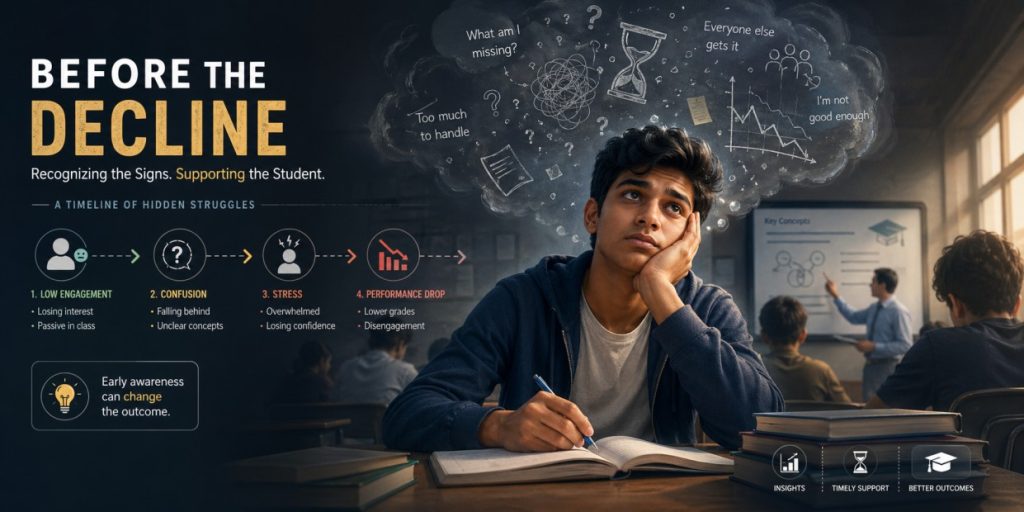
The Hidden Timeline of Student Failure What Happens Before Marks Drop
Many parents and teachers notice student failure only when marks begin to fall. A report card suddenly shows lower scores and everyone starts reacting. But by that time the real problem has already been building for weeks or even months. Student failure does not begin with marks. It begins much earlier in subtle emotional and behavioural shifts that often go unnoticed.
Understanding the hidden timeline of student failure is important for parents principals teachers and career counsellors especially for students in Classes Eight to Ten. This stage shapes confidence study habits and future career direction. When we learn to see early signs we can support students before the situation becomes stressful.
Why Marks Are the Last Signal Not the First
Marks are the final outcome of a long learning process. They reflect what has already happened not what is happening right now. By the time marks drop the student has already gone through confusion self doubt and disengagement.
Research from global education platforms like OECD Education Studies highlights that academic decline is often preceded by changes in motivation attention and emotional wellbeing. This means if we wait for marks we are already late.
This is why schools need to shift focus from results to patterns. Parents also need to observe behaviour not just report cards.
The Hidden Timeline of Student Failure
Student failure follows a pattern. It does not happen suddenly. It develops step by step.
Stage One Loss of Curiosity
The first sign is a quiet drop in curiosity. The student stops asking questions and becomes passive in class. They may still complete homework but without interest.
- Less participation in discussions
- Avoiding challenging questions
- Showing boredom even in interesting topics
At this stage marks are still stable so the problem is often ignored.
Stage Two Emotional Disconnection
As curiosity fades emotional connection with learning weakens. The student starts feeling that studies are a burden instead of an opportunity.
- Frequent complaints about school
- Increased distractions during study time
- Avoiding academic conversations at home
Parents may think the child is becoming lazy but it is actually a signal of emotional disconnect.
Stage Three Drop in Effort
Once emotional connection breaks effort begins to drop. Assignments are rushed or incomplete. Revision becomes irregular.
- Last minute studying
- Skipping practice questions
- Dependence on memorisation instead of understanding
Teachers may notice this change but often attribute it to lack of discipline.
Stage Four Decline in Confidence
As effort reduces understanding becomes weak. The student starts doubting their ability. This creates a cycle where fear of failure reduces effort even more.
- Saying subjects are too difficult
- Avoiding tests or evaluations
- Comparing themselves negatively with peers
At this stage emotional stress increases but marks may still not show a big drop.
Stage Five Visible Drop in Marks
Finally marks begin to fall. This is when most interventions start. Parents become worried teachers become strict and students feel pressure.
But the real issue started much earlier. Addressing only marks without understanding the timeline creates temporary improvement but not long term growth.
Why This Matters for Indian Families
In many Indian households marks are closely linked to future success. Parents want the best opportunities for their children and often focus on results as proof of progress.
But when early signs are ignored children feel pressure instead of support. This can lead to anxiety low self confidence and loss of interest in learning.
Understanding the hidden timeline helps parents shift from reaction to prevention. Instead of asking why marks dropped they can ask what changed earlier.
The Role of Classroom Engagement
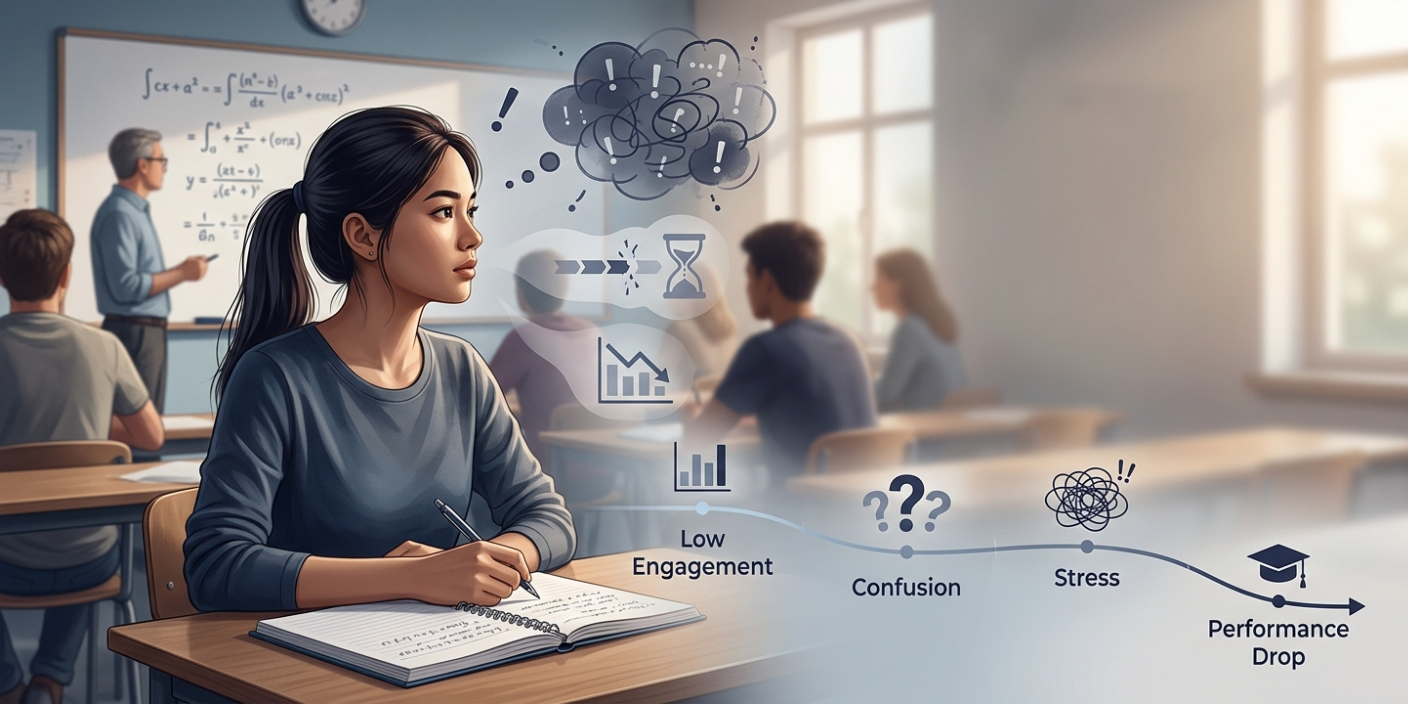
One of the most important early signals is classroom engagement. When students stop engaging learning begins to weaken even if marks look fine.
You can explore deeper insights in this detailed explanation on classroom engagement which shows why engagement is often misunderstood in schools.
Engagement includes attention participation curiosity and emotional involvement. Monitoring this helps detect problems early.
How Schools Can Identify Early Warning Signs
Schools need systems that track behaviour patterns not just marks. This requires a shift in thinking.
- Observe participation and attention levels regularly
- Conduct small feedback sessions with students
- Encourage teachers to note emotional changes
- Use continuous assessment instead of only final exams
Tools like student assessment platforms and AI based insights help identify patterns before marks drop.
How Parents Can Respond at the Right Time
Parents do not need to wait for report cards to support their child. Small daily observations can make a big difference.
- Ask about what they learned not just what they scored
- Notice changes in mood during study time
- Encourage open conversations without judgement
- Celebrate effort and curiosity
These actions create a safe environment where students feel comfortable sharing struggles early.
Supporting Students Through Career Awareness
Sometimes disengagement happens because students do not see the purpose of what they are learning. Connecting studies with future careers can rebuild motivation.
Access to structured career guidance through career experts and exploration tools like career option libraries helps students understand why learning matters.
When students see relevance effort naturally improves.
Using Technology to Reduce Late Intervention
Modern tools can track patterns that are difficult to notice manually. AI based systems can highlight changes in engagement performance and behaviour.
Support tools like educational chat systems also give students a safe space to ask questions without fear. This reduces hesitation and improves clarity.
When used correctly technology becomes a support system not a replacement for teachers.
Shifting From Reaction to Prevention
The biggest change needed in education is moving from reaction to prevention. Instead of waiting for failure we need to detect early signals.
This requires collaboration between parents teachers principals and counsellors. Everyone must focus on the full journey not just the final result.
When early stages are addressed students stay confident engaged and motivated.
A More Human Way to Measure Success
Success in education is not only about marks. It includes curiosity confidence and consistency. When we track these factors we support real learning.
Students in Classes Eight to Ten are at a turning point. With the right support they can build strong foundations for future success.
Understanding the hidden timeline of student failure allows us to act early guide better and create positive learning experiences.
Have you noticed early signs of disengagement in your child or students Share your thoughts and experiences with others and explore more insights to build a supportive learning environment.