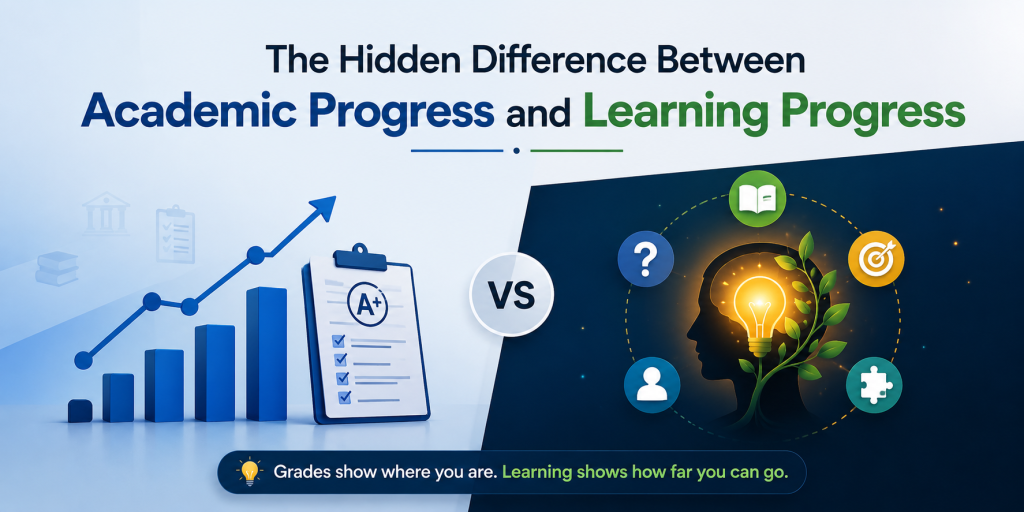
The Hidden Difference Between Academic Progress and Learning Progress
Many parents and educators assume that good marks automatically mean meaningful learning. A student who scores high in examinations is often considered successful, while a student with average marks may be viewed as struggling. However, there is a hidden difference between academic progress and learning progress that is often overlooked in schools across India.
Understanding this difference is essential for parents, principals, teachers, and career counsellors who want students in Classes 8 to 10 to build confidence, develop skills, and prepare for future careers. Academic progress tells us how a student performs in assessments. Learning progress reveals how deeply a student understands concepts, applies knowledge, and grows over time.
When schools focus only on academic outcomes, students may achieve marks without developing critical thinking, creativity, and problem solving abilities. This informative article explores why both measures matter and how educators can create a balanced approach to student development.
What Is Academic Progress?
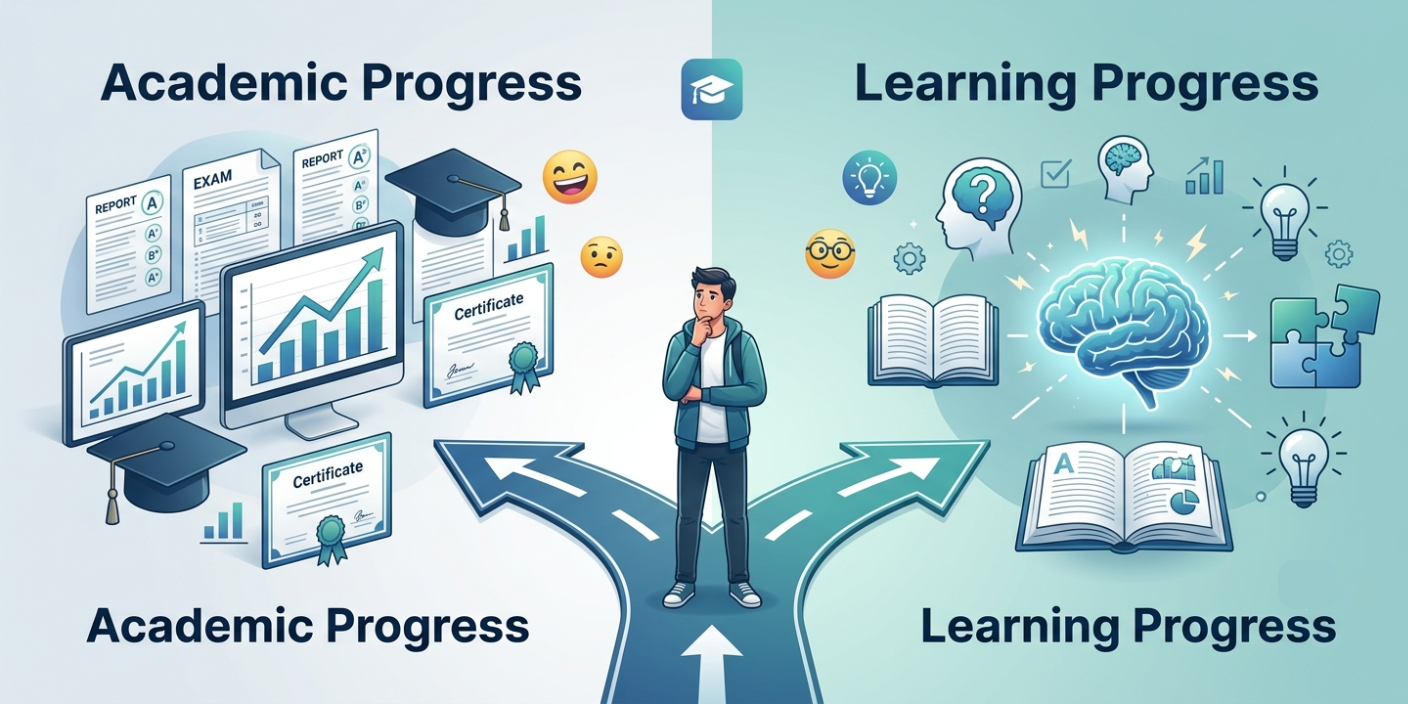
Academic progress refers to measurable performance indicators such as examination scores, grades, assignments, and classroom assessments. These metrics help schools track whether students are meeting curriculum expectations.
Academic progress is important because it provides clear benchmarks for evaluating student achievement. It helps schools identify strengths and areas where additional support may be needed.
- Test scores and examination results
- Homework completion
- Assignment grades
- Attendance and participation records
- Subject wise performance reports
These indicators provide useful information, but they do not always reveal how much a student has actually learned.
What Is Learning Progress?
Learning progress focuses on the growth of knowledge, skills, understanding, and confidence over time. It measures how effectively students can apply what they have learned in new situations.
A student may not score the highest marks in mathematics but may show significant improvement in problem solving and logical thinking. This growth represents genuine learning progress.
According to research from OECD Education, successful learning involves developing the ability to transfer knowledge across different situations rather than simply memorizing information.
- Understanding concepts deeply
- Applying knowledge in real life situations
- Improving critical thinking abilities
- Building confidence and independence
- Developing communication and collaboration skills
Learning progress often happens gradually and may not always appear immediately in report cards.
Why The Difference Matters More Than Ever
The future workplace values adaptability, creativity, communication, and continuous learning. Students who only focus on marks may struggle when faced with real world challenges that require independent thinking.
For Indian students navigating Classes 8 to 10, this period is especially important because it influences subject choices, career exploration, and self confidence.
Parents often worry when marks fluctuate slightly. However, a temporary drop in scores may sometimes accompany deeper learning as students engage with more challenging concepts.
Understanding the distinction between academic progress and learning progress helps families make better decisions about student development.
A Simple Example That Every Parent Can Relate To
Imagine two students preparing for a science examination.
Student A memorizes answers from previous papers and scores 90 percent.
Student B scores 80 percent but can explain scientific concepts, connect ideas to everyday life, and solve unfamiliar problems.
Both students demonstrate academic achievement, but Student B may have stronger learning progress because understanding extends beyond memorization.
This does not mean marks are unimportant. It means that marks alone do not provide the complete picture.
Why Schools Often Measure Academic Progress More Easily
Academic progress is easier to quantify. Schools can quickly compare scores, generate reports, and monitor performance trends.
Learning progress is more complex because it involves skills, attitudes, and understanding that develop over time.
For example:
- Critical thinking cannot always be measured through standard tests.
- Creativity develops differently in each student.
- Confidence may increase gradually across months.
- Communication skills often improve through practice rather than examinations.
Because these qualities are harder to measure, many schools unintentionally prioritize academic results.
The Impact on Student Motivation
When students are evaluated only through marks, they may begin to associate success exclusively with grades. This can reduce curiosity and willingness to take learning risks.
Students may avoid challenging subjects because they fear lower scores. Over time, this can limit their growth and confidence.
Many educators observe that students who focus on learning progress often develop stronger resilience. They view mistakes as opportunities to improve rather than signs of failure.
Schools that encourage growth mindsets create environments where students feel safe to explore new ideas.
How Parents Can Support Learning Progress at Home
Parents play a major role in helping children value learning beyond marks.
- Ask what your child learned rather than only asking about marks.
- Celebrate effort and improvement.
- Encourage curiosity and questions.
- Discuss real world applications of classroom concepts.
- Help children reflect on challenges and growth.
These conversations help students develop a healthier relationship with education.
The Role of Technology in Measuring True Learning
Modern educational technology allows schools to move beyond traditional assessment methods. Data driven tools can identify patterns in student understanding and skill development.
Solutions such as student assessment platforms help educators evaluate more than examination performance. They provide insights into strengths, interests, and growth opportunities.
Similarly, AI powered learning insights can help teachers understand individual learning journeys and personalize support.
These tools make it easier to track both academic progress and learning progress together.
How Career Counsellors Benefit From Learning Progress Data
Career guidance becomes more effective when counsellors understand how students learn rather than only looking at marks.
A student with average academic performance may possess exceptional analytical thinking, creativity, or communication skills. These strengths often indicate future career potential.
Resources such as career expert guidance and career exploration tools can help students discover opportunities that align with their abilities and interests.
This broader perspective supports better long term career decisions.
Warning Signs That Schools May Be Focusing Too Much on Academic Progress
- Students fear making mistakes.
- Classroom discussions become limited.
- Creativity is discouraged.
- Parents only receive score based updates.
- Student wellbeing receives less attention than performance.
Many of these patterns are discussed further in this educational resource about classroom survival mode, which explores how excessive pressure affects student engagement.
Building a Balanced Approach for Indian Schools
The strongest schools recognize that academic progress and learning progress are partners, not competitors. Students need both measurable achievement and meaningful understanding.
A balanced approach includes:
- Regular assessments
- Project based learning
- Student reflection activities
- Career exploration opportunities
- Personalized learning support
- Teacher feedback focused on growth
When schools value both forms of progress, students become more confident learners and better prepared for future success.
Final Thoughts
The hidden difference between academic progress and learning progress can significantly influence student outcomes. Academic progress provides important performance data, while learning progress reveals how students grow, think, and apply knowledge.
For parents, principals, teachers, and career counsellors, recognizing this distinction creates opportunities to support students more effectively. By focusing on both achievement and growth, schools can help young learners build stronger foundations for education, careers, and life.
How does your school balance academic progress and learning progress? Share your thoughts with fellow educators and parents, explore more educational insights, and help create learning environments where every student can thrive.