
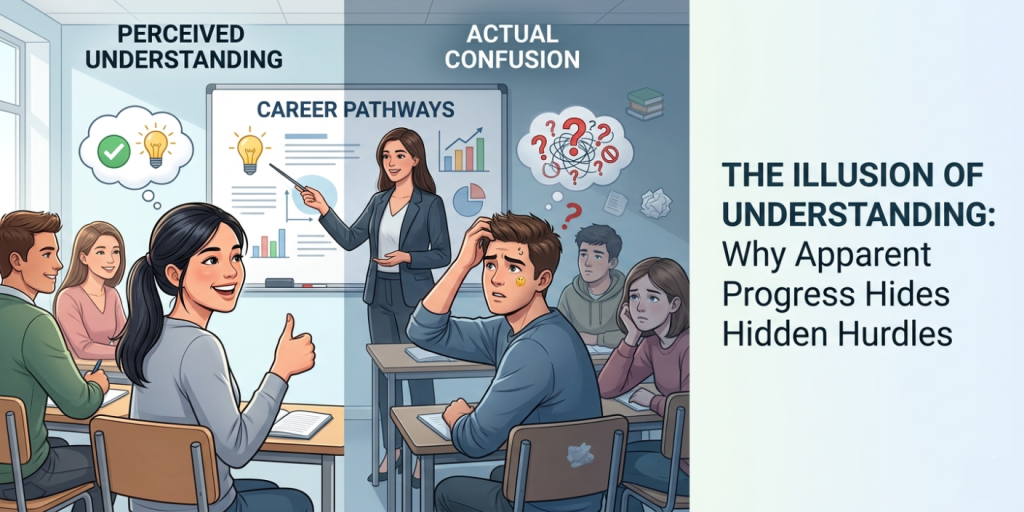
Why Students Say I Understand Even When They Do Not And How Schools Misread It
In many classrooms across India a common moment repeats every day. A teacher explains a concept and asks if everyone understands. Students nod and say yes. But later during homework or exams confusion appears. Parents feel frustrated teachers feel disappointed and students feel lost. This pattern is not about dishonesty. It reflects a deeper gap in how learning is understood and measured.
This article explores why students say I understand even when they do not and how schools often misread this signal. It also shares practical ways for parents principals teachers and career counsellors to bridge this hidden gap.
The Meaning Behind I Understand
When a student says I understand it does not always mean full clarity. Often it means something very different. It can mean the student followed the explanation in that moment but cannot apply it independently later.
In Classes Eight to Ten this difference becomes very important. Subjects become more complex and require deeper thinking. Students need not just listening skills but application and problem solving abilities.
- They recognize the concept but cannot explain it in their own words
- They feel shy to admit confusion in front of classmates
- They think partial understanding is enough
- They want to avoid slowing down the class
So when they say I understand it often reflects comfort not mastery.
Why Students Hesitate to Admit Confusion
Indian classrooms often value correct answers and speed. Students quickly learn that asking too many questions may attract attention or even judgment. This creates a silent pressure to appear confident.
For many students especially teenagers social image matters a lot. They do not want to look weak in front of peers. So they choose to stay quiet even when confused.
Parents also unknowingly add to this pressure by focusing heavily on marks. When children feel that mistakes lead to disappointment they avoid admitting gaps in understanding.
Common Emotional Reasons Behind This Behavior
- Fear of being judged by classmates
- Desire to appear intelligent
- Past experiences of being corrected harshly
- Lack of safe space to ask questions
This emotional layer is often invisible but very powerful.
How Schools Misread Student Responses
When teachers hear I understand they often move forward assuming learning has happened. This creates a gap between teaching and actual learning.
This gap grows over time. By the time exams arrive students realize they cannot apply concepts. Teachers then feel students did not pay attention while students feel teaching moved too fast.
This misunderstanding is discussed in depth in this detailed explanation of hidden learning gaps. It shows how completion of syllabus is often mistaken for real understanding.
The Difference Between Hearing and Learning
Learning is not the same as listening. A student may hear every word but still not build a strong mental connection. True learning requires active engagement.
- Explaining the concept in their own words
- Solving new problems without help
- Connecting ideas across subjects
- Applying knowledge in real situations
Without these steps understanding remains surface level.
Why This Matters for Career Development
Students in Classes Eight to Ten are starting to think about future careers. If their learning is based on memorization rather than understanding it affects their confidence later.
Career decisions require clarity about strengths and interests. When students say I understand without real clarity they may choose paths based on assumptions rather than true ability.
Tools like student assessment platforms help identify actual understanding levels. Similarly AI based insights can highlight learning patterns that teachers may miss in busy classrooms.

What Research Says About Learning Gaps
Global education research shows that students often overestimate their understanding. According to studies shared by OECD education research many learners feel confident immediately after instruction but struggle to recall or apply concepts later.
This is known as the illusion of understanding. It happens when information feels familiar but is not deeply processed.
Recognizing this pattern is the first step toward improving learning outcomes.
How Teachers Can Identify Real Understanding
Instead of asking do you understand teachers can use simple strategies to check clarity.
- Ask students to explain concepts in their own words
- Give short application based questions
- Encourage peer discussions
- Use real life examples for explanation
These methods reveal whether students truly understand or are just following along.
How Parents Can Support Honest Learning
Parents play a crucial role in creating a safe environment for learning. When children feel accepted even when they make mistakes they are more likely to admit confusion.
- Encourage questions at home without judgment
- Focus on effort rather than only marks
- Discuss concepts instead of only checking homework
- Celebrate curiosity and improvement
This builds confidence and honesty in learning.
The Role of Career Counsellors and School Leaders
Career counsellors and principals can create systems that focus on understanding not just completion. This includes regular feedback sessions and personalized guidance.
Support tools such as AI learning support and access to career experts help students clarify doubts without fear.
Exploring options through career libraries also becomes meaningful when students truly understand their abilities.
Building Classrooms Where It Is Safe to Say I Do Not Understand
The goal is not to stop students from saying I understand but to ensure they feel comfortable saying I do not understand when needed.
Simple cultural shifts can make a big difference.
- Teachers openly appreciating questions
- Students helping each other without judgment
- Reducing focus on speed and increasing focus on clarity
- Creating small discussion groups
These changes build trust and improve learning outcomes.
A New Way to Look at Student Responses
Instead of taking I understand as a final answer schools can treat it as a starting point. It is an invitation to explore deeper.
When educators shift from checking answers to understanding thinking processes students feel supported rather than judged. This leads to stronger concepts better performance and more confident career choices.
Have you noticed your child or students saying I understand but struggling later Share your experience in the comments and explore more insights to build honest and confident learning environments.