When Teaching Is Completed but Learning Is Not The Hidden Gap Schools Do Not Track
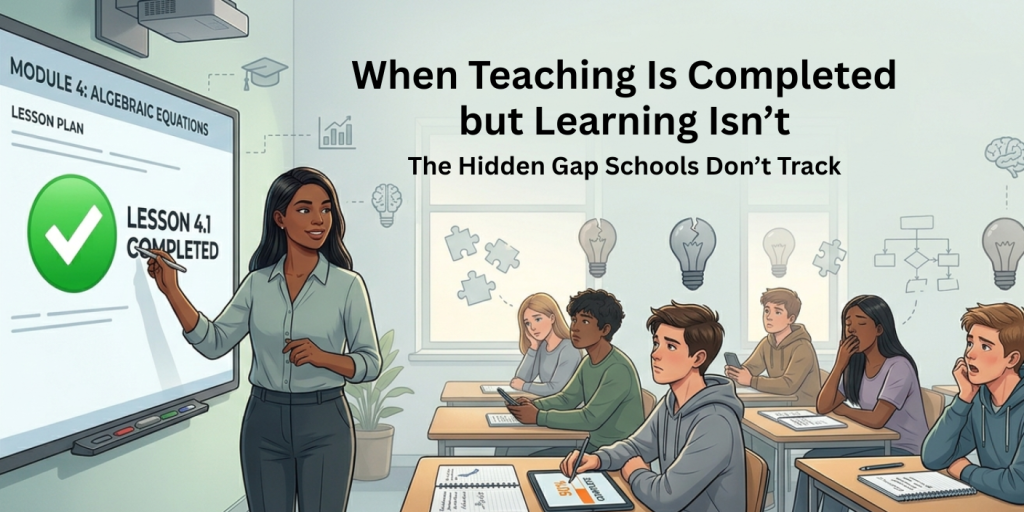
Every day across Indian schools teachers complete their lessons on time. Chapters are explained homework is assigned and the syllabus moves forward. On paper everything looks perfect. But many parents quietly notice something different. Their child attends classes regularly yet struggles to truly understand concepts or apply knowledge. This is where the real issue lies. Teaching is completed but learning is not.
This hidden gap is one of the most important challenges in education today. It is not visible in report cards or attendance records. It lives in the space between what is taught and what is actually understood. This article explains why this gap exists and how parents teachers and schools can work together to close it.
What Does Teaching Completed but Learning Not Completed Really Mean
In most schools teaching is measured by syllabus completion. Once a topic is explained it is considered done. But learning is a different process. It requires understanding practice reflection and connection to real life.
A student may sit through a mathematics class and copy everything from the board. But when asked to solve a problem independently they may struggle. This shows that teaching has happened but learning has not been completed.
According to studies by World Bank Education many students globally attend school but do not achieve expected learning outcomes. This confirms that the gap between teaching and learning is real and widespread.
Why This Hidden Gap Exists in Schools
There are several reasons why this gap continues to grow especially in Classes Eight to Ten where academic pressure increases.
Focus on Completing the Syllabus
Teachers are often under pressure to finish the syllabus before exams. This leads to faster teaching and less time for deep understanding.
Limited Individual Attention
In large classrooms it becomes difficult to track each student’s understanding. Some students fall behind silently.
Exam Oriented Learning
Students focus on memorizing answers instead of understanding concepts. This creates short term success but weak long term learning.
Lack of Continuous Feedback
Most assessments happen after a chapter is completed. By that time learning gaps are already deep.
How This Gap Affects Students in Classes Eight to Ten
This stage is crucial for shaping future careers. When learning gaps are ignored students start losing confidence.
- They hesitate to ask questions in class
- They depend on rote learning
- They feel stressed during exams
- They become confused about career choices
Parents often think their child is not studying enough. But the real issue may be that the foundation itself is weak.
The Emotional Impact on Parents and Teachers
This gap does not affect students alone. Parents feel worried when they see effort without results. Teachers feel frustrated when students do not perform despite completing lessons.
In many Indian homes education is deeply connected to future security. When learning does not match expectations it creates stress for the entire family.
Teachers also carry emotional pressure. They want students to succeed but often lack tools to track real understanding continuously.
Why Schools Often Do Not Track This Gap
Schools usually track attendance marks and syllabus progress. These are easy to measure. But learning is complex and requires deeper observation.
Tracking real learning means understanding how each student thinks solves problems and applies knowledge. This requires time and smart systems.
Without proper tools this gap remains invisible.
How Technology Can Help Bridge the Gap
Modern education platforms are changing how schools track learning. Instead of only checking marks they analyse understanding patterns.
For example tools like student assessment platforms help identify learning gaps early. They show which concepts a student has not fully understood.
Similarly AI based insights provide teachers with clear data on student progress. This allows them to adjust teaching methods.
Support tools like learning assistance chat systems also help students clear doubts instantly instead of waiting for the next class.

Role of Career Awareness in Closing Learning Gaps
When students understand how subjects connect to real careers they become more engaged. Learning becomes meaningful instead of mechanical.
Platforms like career exploration tools and guidance from career experts help students see the purpose behind learning.
This motivation reduces the gap between teaching and actual learning.
What Parents Can Do at Home
Parents play a key role in identifying and reducing learning gaps. Small changes can make a big difference.
- Ask your child to explain what they learned instead of asking what was taught
- Encourage questions and curiosity
- Focus on understanding rather than marks
- Create a safe environment where mistakes are allowed
These habits build confidence and deeper learning.
What Teachers and Schools Can Improve
Schools can take practical steps to ensure that learning matches teaching.
- Use regular concept checks instead of only final tests
- Encourage interactive and discussion based classes
- Provide personalized feedback to students
- Use data driven tools to track understanding
These changes make learning visible and measurable.
Connecting This Gap to Career Confusion
When students do not fully understand subjects they struggle to identify their strengths. This leads to confusion about future careers.
A deeper understanding of this issue is explained in this detailed analysis on career confusion. It shows how timing and learning gaps affect decision making.
Closing the learning gap early helps students make confident career choices later.
Building a Future Where Learning Truly Happens
Education should not be about finishing chapters. It should be about building understanding confidence and curiosity.
When schools parents and counsellors focus on real learning students feel more engaged and less stressed. They start enjoying the process instead of fearing exams.
The goal is simple but powerful. Make sure that when teaching is completed learning is also completed.
Have you noticed this gap in your child or school Share your thoughts and experiences and explore more insights to create a better learning journey for every student.