
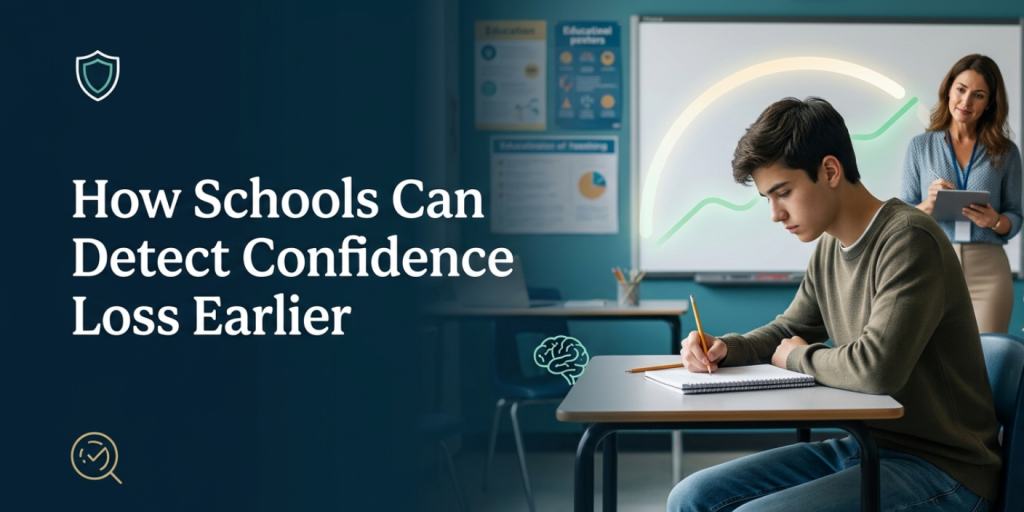
How Schools Can Detect Confidence Loss Earlier
Confidence is one of the strongest predictors of how students learn, participate, make decisions, and prepare for their future. Yet confidence loss rarely happens overnight. It develops quietly through small experiences that often go unnoticed by parents and educators. By the time declining confidence becomes visible through poor grades, classroom withdrawal, or lack of motivation, the student may already be struggling emotionally.
For schools across India, especially those guiding students in Classes 8 to 10, detecting confidence loss earlier can make a lasting difference. Early identification helps educators support students before academic performance, career aspirations, and emotional wellbeing begin to decline. This research based article explains why confidence loss often remains hidden, how schools can identify it earlier, and what practical steps parents, teachers, principals, and career counsellors can take together.
Why Confidence Loss Often Goes Unnoticed
Many schools rely heavily on examination scores to understand student progress. While marks reveal academic performance, they do not always reflect how students feel about themselves. A student may continue scoring well while silently losing confidence. Another student may appear quiet in class without showing any obvious warning signs.
Confidence loss usually begins with small behavioural changes. Students may stop asking questions, hesitate before answering, avoid leadership opportunities, or become afraid of making mistakes. These subtle signals often look like personality traits instead of early indicators of emotional struggle.
- Speaking less during classroom discussions
- Avoiding challenging assignments
- Depending excessively on classmates
- Showing fear of receiving feedback
- Losing interest in activities they once enjoyed
Recognising these patterns early allows schools to provide meaningful support before confidence loss begins affecting academic growth.
Why Confidence Matters During Classes Eight to Ten
Students between Classes Eight and Ten experience rapid emotional and academic development. They begin thinking seriously about career choices, board examinations, friendships, and personal identity. During this stage, confidence shapes how willing they are to learn, explore new opportunities, and recover from setbacks.
Students with healthy confidence are more likely to participate actively, solve problems independently, and develop resilience. Those experiencing confidence loss often become hesitant, anxious, and uncertain about their abilities.
According to UNICEF India, creating emotionally supportive learning environments helps children develop stronger wellbeing, confidence, and lifelong learning skills.
Common Reasons Behind Confidence Loss
Confidence loss is rarely caused by one event. Instead, several experiences gradually reduce a student’s belief in their own abilities.
- Constant comparison with classmates or siblings.
- Fear of failure because mistakes are viewed negatively.
- Academic pressure that focuses only on marks.
- Negative self talk after repeated setbacks.
- Lack of encouragement despite consistent effort.
Understanding these causes helps schools create systems that strengthen confidence instead of unintentionally reducing it.
How Schools Can Detect Confidence Loss Earlier
Detecting confidence loss earlier requires looking beyond report cards. Schools that observe behaviour, participation, communication, and emotional wellbeing gain a more complete understanding of student development.
Observe Classroom Participation
Students experiencing confidence loss often participate less despite understanding the lesson. Teachers should notice sudden changes rather than comparing students with one another.
Monitor Behaviour Over Time
Confidence changes gradually. Tracking classroom behaviour across several weeks helps identify patterns instead of isolated incidents.
Encourage Regular Student Conversations
Simple conversations help teachers understand what students are thinking and feeling. Sometimes a short discussion reveals more than several tests.
Collect Feedback From Multiple Sources
Parents, teachers, counsellors, and activity coordinators often notice different aspects of student behaviour. Combining observations creates a more accurate picture of confidence development.

The Role of Teachers in Preventing Confidence Loss
Teachers interact with students every day, making them the first people likely to notice early signs of confidence loss. Small classroom practices can significantly strengthen student confidence.
- Celebrate consistent effort instead of only high marks.
- Allow students to answer without fear of embarrassment.
- Provide constructive feedback with encouragement.
- Recognise improvement even when progress is gradual.
- Create opportunities for every student to contribute.
These habits help students develop resilience and confidence over time.
How Parents Can Identify Early Warning Signs
Parents spend valuable time with children outside school. They often notice emotional changes before academic performance begins to decline.
- Loss of enthusiasm for school.
- Avoiding conversations about studies.
- Expressing self doubt frequently.
- Giving up quickly when facing challenges.
- Showing fear of disappointing parents.
Instead of immediately focusing on performance, parents can ask open questions about how their child feels during learning. Listening without judgement often strengthens trust.
Why Career Counselling Should Begin With Confidence
Career decisions become difficult when students no longer believe in their own abilities. Before discussing future careers, schools should understand whether students feel confident enough to explore possibilities.
Comprehensive assessments available through Edvdo Assessment help schools understand student strengths beyond examination marks. Combined with AI Insights, educators can identify meaningful behavioural patterns that support early intervention.
Students who need guidance can also benefit from conversations with experienced professionals through Career Experts, while intelligent support tools like the AI Chatbot provide accessible educational assistance whenever students need it.
Building a School Culture That Protects Confidence
Schools that successfully reduce confidence loss focus on emotional safety as much as academic excellence. Students perform better when they believe mistakes are opportunities for learning rather than reasons for embarrassment.
- Encourage curiosity.
- Recognise improvement regularly.
- Promote teamwork over unhealthy competition.
- Create safe spaces for asking questions.
- Celebrate diverse talents beyond academics.
Such environments help every student develop confidence that lasts beyond school.
Supporting Students Before Labels Shape Their Identity
Sometimes students begin believing labels such as average, weak, or intelligent. These labels influence confidence and future decisions. Schools should recognise abilities as developing rather than fixed.
For additional insights, read The Confidence Cost of Early Career Labels on Students, which explains how early assumptions can influence student confidence and career choices.
Students exploring future careers can also access a wide range of opportunities through the career exploration library, helping them discover possibilities that match their strengths and interests.
Conclusion
Confidence loss is easier to prevent than to rebuild. Schools that observe behaviour, encourage open conversations, involve parents, and use meaningful student insights create environments where confidence grows naturally. Detecting confidence loss earlier helps students become resilient learners who are ready to face academic challenges and future career decisions with optimism.
When parents, teachers, principals, and career counsellors work together, every student has a better chance of reaching their true potential with confidence.