
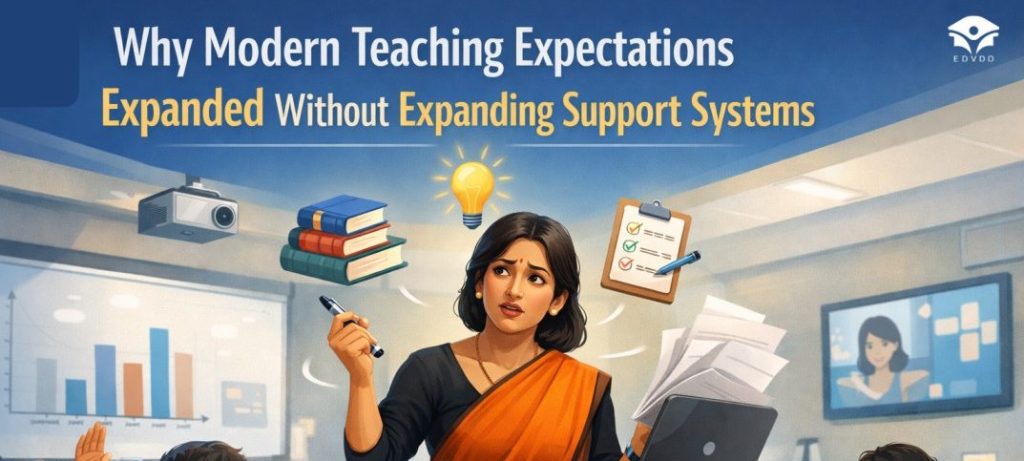
Why Modern Teaching Expectations Expanded Without Expanding Support Systems
In Indian schools teachers are expected to do more than ever before. From integrating technology to delivering personalised learning and supporting student emotional wellbeing the list of expectations has grown dramatically. Yet the support systems to help teachers manage these responsibilities have not kept pace. This imbalance leads to stress, burnout, and a classroom experience that can feel overwhelming for both educators and students.
The Expanding Role of Modern Teachers
Today teachers are not only instructors but also mentors, counsellors, and tech facilitators. While parents and principals appreciate the desire for comprehensive education, the reality is that teachers often juggle multiple roles at the same time. This includes:
- Planning and delivering curriculum across multiple subjects
- Providing personalised support to students with diverse learning needs
- Maintaining classroom discipline while fostering creativity
- Using technology platforms and educational apps effectively
- Communicating regularly with parents and school administration
Each of these responsibilities demands time, focus, and emotional energy. When expectations increase without additional support teachers naturally feel stretched thin.
Why Support Systems Have Lagged Behind
Many Indian schools continue to rely on traditional structures that were designed decades ago. Support systems such as co-teaching, mental health resources, and administrative assistance have not expanded proportionally with teaching demands. As a result, teachers face:
- Limited access to counselling or mental health support
- Minimal time for planning or collaborative learning
- Insufficient professional development for new teaching technologies
- High administrative workload without dedicated staff
This gap between expectations and support creates a cycle where teachers work harder but do not feel more effective or appreciated.
The Emotional Impact on Teachers
When teaching expectations expand without support, emotional exhaustion is inevitable. Teachers experience:
- Chronic stress and fatigue even on days when classes go well
- Decreased motivation and engagement in classrooms
- Difficulty maintaining patience with students
- Lower job satisfaction and increased risk of burnout
Parents may notice their children becoming less engaged or more anxious, which is often a reflection of the teacher’s emotional bandwidth being stretched too thin. According to Education Week research, teacher burnout directly impacts student learning outcomes and classroom climate.
Real Life Classroom Challenges
Consider a teacher in a typical Indian middle school managing a class of thirty students. In addition to delivering the lesson, the teacher is:
- Answering individual student questions
- Monitoring behavioural issues
- Updating digital learning platforms
- Preparing reports for parents
- Coordinating with administration for school activities
Without adequate support this becomes a high-stress environment that can reduce teacher effectiveness and student engagement simultaneously.

Why Indian Parents Should Understand Teacher Overload
Parents play a key role in shaping school expectations. Many Indian parents want teachers to provide comprehensive attention to their child’s academic and emotional growth. However, when parents demand too much without understanding teacher limitations, it can unintentionally increase stress. By being aware of teacher workloads, parents can:
- Focus on constructive collaboration with teachers
- Support rather than add pressure
- Encourage balanced expectations around homework and projects
This understanding benefits not only teachers but also students who thrive in a calmer, more focused learning environment.
How Schools Can Bridge the Gap
Principals and school administrators can implement strategies that align expectations with realistic support systems:
- Introduce co-teaching models to distribute classroom responsibilities
- Provide dedicated time for lesson planning and reflection
- Invest in teacher training for emerging technologies
- Offer mental health and wellbeing programs for staff
- Utilise AI tools such as AI insights platforms to streamline grading and reporting
Smart use of technology and strategic scheduling can reduce repetitive tasks, freeing teachers to focus on meaningful instruction and student engagement.
The Role of Career Counsellors and EdTech Tools
Career counsellors and educational technology platforms provide additional layers of support. Tools like AI powered assessment systems and AI chatbots help teachers manage student queries, track progress, and personalise learning without increasing workload. Career guidance experts can also assist in reducing classroom stress by advising students on balanced study strategies.
When teachers are supported by these systems students gain a more stable and engaging learning experience, helping them make better career and academic choices.
The Long Term Cost of Ignoring Support
Ignoring teacher support has consequences for the entire educational ecosystem. Overloaded teachers are more likely to leave the profession, reducing the overall quality of education. Students exposed to stressed educators may develop anxiety, lack motivation, and associate learning with pressure rather than curiosity.
For more insights on teacher burnout and workload imbalance explore this article on teacher burnout.
Building Sustainable Teaching Models
Modern teaching expectations will continue to expand as education evolves. However sustainable models require matching growth in support systems. By recognising teacher workloads and providing appropriate assistance through technology, collaboration, and mental health resources, schools can create environments where teachers feel effective, students stay engaged, and parents see real progress.
Share your thoughts on how schools can better support teachers and students. Comment, discuss, and explore more research based strategies to make education balanced and effective.