Why Hard Work Is Failing Teachers The Structural Barriers Blocking Real Career Growth
Across India many teachers work longer hours than ever before. They prepare lessons late at night check assignments on weekends and attend training sessions during holidays. Yet despite this effort career growth often feels slow and uncertain. Parents see dedicated teachers remain in the same roles for years. Principals notice rising frustration among staff. Career counsellors hear students say they do not want to choose teaching as a future path. This informative article explains why hard work alone is no longer enough for teachers and how structural barriers inside the education system block real career progress.
The Promise of Hard Work in Teaching
In Indian culture hard work is deeply respected. Teachers are often told that dedication and patience will naturally lead to promotions and respect. Many enter the profession with this belief. They imagine growing from classroom teaching into leadership roles or subject expert positions over time.
Parents encourage children to respect teachers because of their effort and service. Students see teachers as role models of discipline and responsibility. This makes it painful when teachers realise that effort alone does not always bring growth.
This gap between effort and reward creates emotional strain and weakens motivation. It also affects the classroom environment because frustrated teachers find it harder to inspire students.
What Structural Barriers Really Mean
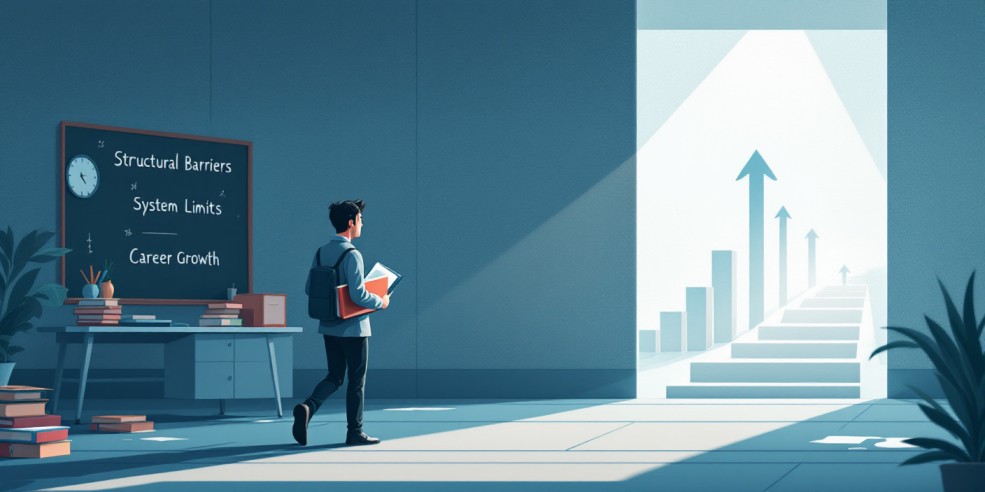
Structural barriers are problems built into the system. They are not caused by laziness or lack of talent. They come from how roles are designed and how decisions are made.
In many schools teaching is treated as a fixed role with limited movement. A teacher may improve skills but still stay in the same position because there are few higher level roles available.
- Limited promotion opportunities
- No clear career ladder
- Evaluation based on exam results only
- Administrative load replacing teaching focus
These barriers make it difficult for teachers to see a future beyond their current classroom.
Why Performance Does Not Always Lead to Progress
In many professions skill growth leads to new roles and higher responsibility. In teaching the same effort often results in more work instead of more opportunity.
A good teacher is given extra classes. A reliable teacher is given more paperwork. A popular teacher is asked to manage events. These tasks increase workload but do not create new career paths.
This creates a cycle where hard work is rewarded with more pressure rather than recognition. Over time teachers feel trapped inside the system.
How This Affects Student Learning
Students sense when teachers feel stuck. Lessons become more focused on completing syllabus than exploring ideas. Curiosity reduces and fear of exams increases.
For Classes Eight to Ten this stage is critical. Students are forming opinions about education and future careers. If teachers appear stressed and unmotivated students may link success only with struggle not growth.
The Administrative Burden on Teachers
Modern teaching includes many non teaching tasks. Digital records attendance reports performance charts and parent communication take up large portions of the day.
These tasks are important but they reduce time for lesson planning and personal development. Teachers spend energy managing systems instead of improving subject knowledge.
According to global research by UNESCO teacher workload and lack of career mobility are key reasons for low retention in education systems.
Why Parents Should Care About Teacher Career Growth
Many parents focus mainly on student marks. But teacher wellbeing directly affects student confidence and curiosity.
When teachers see a future for themselves they invest more emotionally in their work. They experiment with new methods and encourage questions. When they feel blocked they rely on routine and control.
Parents who support schools in building growth systems help create healthier learning spaces for their children.
The Link Between Teacher Growth and Student Career Awareness
Teachers guide students in choosing streams and careers. If teachers themselves experience limited growth they may unknowingly pass on fear based advice.
Students hear messages like choose safe paths or avoid risk. This reduces exploration and creativity.
Career platforms such as career option libraries and tools like AI based learning insights help reduce this burden by giving structured guidance.
How Career Counsellors and Principals Can Remove Barriers
Leadership plays a major role in changing structures. Principals and counsellors can create pathways for growth inside schools.
- Create mentoring roles for experienced teachers
- Allow subject specialisation paths
- Separate teaching and heavy administration
- Recognise innovation not only exam scores
Such steps show teachers that growth is possible without leaving the classroom.
Using Technology to Support Teacher Development
Technology can reduce repetitive tasks and free time for learning. Tools like student assessment systems help teachers understand learning gaps without manual work.
Support systems such as educational chat assistants reduce pressure from constant queries and guidance requests.
Access to career experts allows teachers to share responsibility for student counselling instead of carrying it alone.
Emotional Containment and Career Frustration
Teachers are often expected to absorb student stress and family expectations. This emotional containment increases fatigue.
Over time this creates internal conflict. Teachers care deeply but feel powerless to change their situation.
Related research on this issue can be explored in this detailed article on emotional containment in schools.
What Real Career Growth for Teachers Should Look Like
Career growth should include learning new roles without leaving teaching behind.
- Curriculum designer roles
- Student wellbeing coordinators
- Learning technology guides
- Community education leaders
These paths keep teachers connected to students while expanding their influence.
The Long Term Impact on Indian Education
If structural barriers remain unchanged talented teachers will leave or disengage. This weakens the system from within.
Students lose mentors. Parents lose trust. Schools lose stability.
Strong systems depend on motivated professionals who can see a future for themselves.
A Shared Responsibility for Change
Parents principals counsellors and education platforms must work together. Growth systems protect teacher energy and student confidence.
When teachers grow students grow. When systems support effort motivation returns.
Do you believe teachers in your school have real career growth opportunities Share this informative article with your school community and explore more research based insights to build supportive learning environments for both teachers and students.