

Why Expecting Teachers to Handle Everything Is Quietly Lowering Classroom Quality
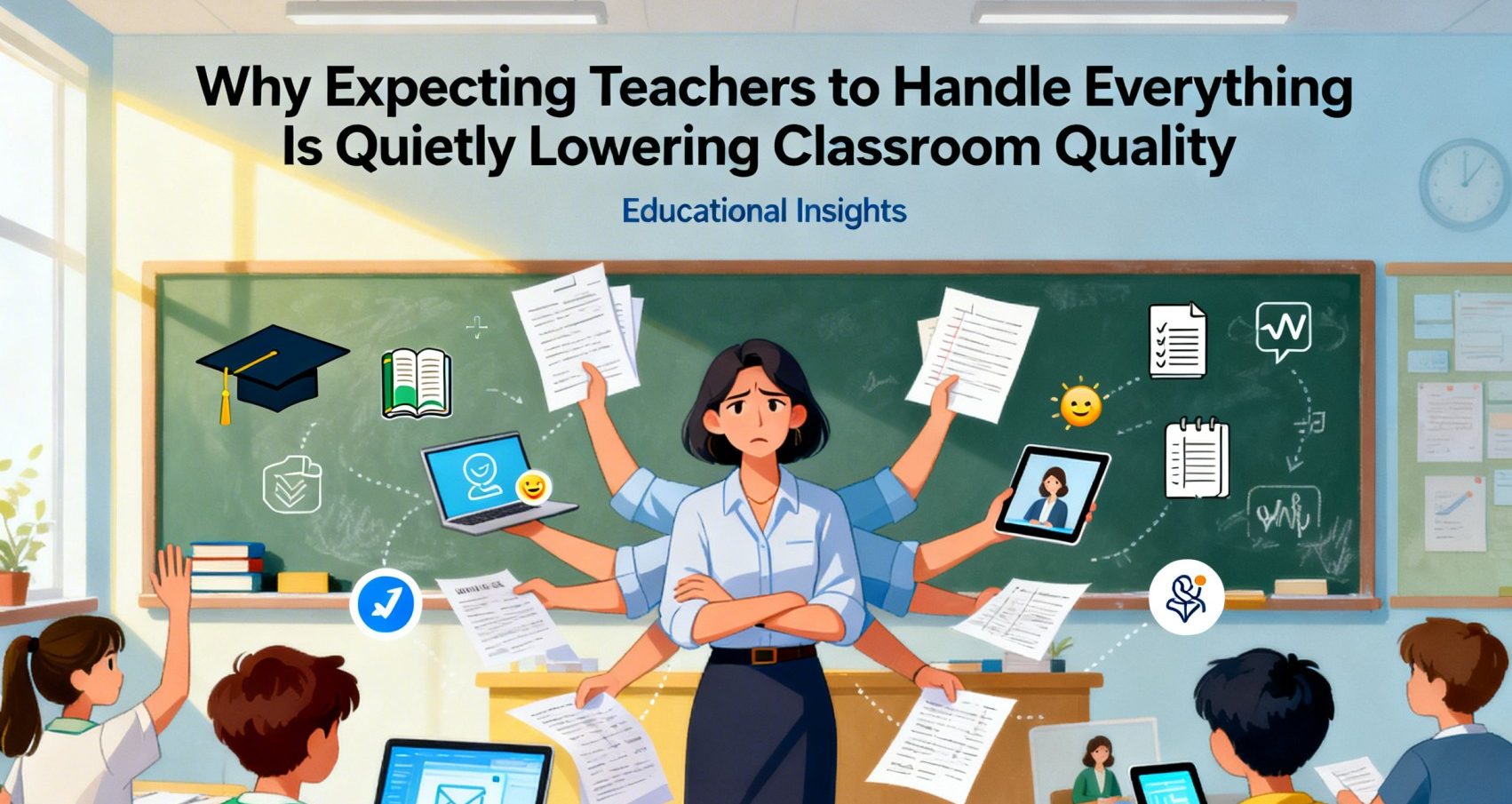
Across many Indian schools teachers manage far more than teaching. They guide students emotionally, complete administrative work, manage discipline, prepare exam reports, respond to parents, organize events, and still deliver engaging lessons every day. On paper this may look like dedication and responsibility. In reality it creates a hidden problem that slowly reduces classroom quality.
Many schools assume that strong teachers can manage endless responsibilities. In practice this expectation spreads attention too thin. Teachers move from one urgent task to another and meaningful learning begins to lose depth.
The Growing List of Responsibilities for Teachers
A teacher rarely spends the entire day teaching. Modern schooling includes documentation digital reporting student counselling exam preparation and communication with parents. Each duty may appear small but together they consume large amounts of time and emotional energy.
As responsibilities expand teachers start shifting attention from deep teaching toward task completion. Over time this shift affects the quality of classroom interaction.
- Preparing lesson plans and explaining concepts clearly
- Monitoring classroom behaviour and discipline
- Maintaining attendance records and academic reports
- Responding to parent concerns and school communication
- Managing extracurricular activities and school programs
Trying to balance all these tasks reduces the time available for individual attention to students. The classroom may still run smoothly but the richness of learning slowly fades.
Why Handling Everything Reduces Classroom Quality
The idea that teachers should manage every aspect of school life sounds admirable but it ignores how human attention works. Quality teaching requires focus patience and preparation. Divided attention pushes the brain into survival mode instead of creative thinking.
Educational research highlights that teacher effectiveness depends on preparation time and emotional energy. Organizations such as OECD Education emphasize that supportive work environments allow teachers to concentrate on instruction instead of administrative overload.
Several subtle changes begin appearing inside classrooms when workload becomes excessive.
- Lessons become more routine and less interactive
- Creative activities and discussions reduce gradually
- Teachers depend more on textbooks instead of exploration
- Students receive less personalized feedback
School reports rarely capture these shifts but they strongly influence how deeply students understand concepts.
Impact on Students in Classes Eight to Ten
Students in middle and secondary school years develop academic habits that shape their future. They begin thinking about career choices and personal strengths. At this stage classroom quality becomes more important than simple memorization.
Heavy workloads leave teachers with less time to guide curiosity driven learning. As a result many lessons focus mainly on completing the syllabus. Opportunities for discussion exploration and problem solving become limited.
Indian parents often measure success through examination results. True learning however also includes critical thinking confidence and awareness of career opportunities. When classroom depth reduces students may earn marks yet miss meaningful understanding.
Emotional Pressure Teachers Experience
Teachers often feel responsible for everything that happens inside school walls. Academic struggles among students create concern. Parent dissatisfaction creates additional pressure. Administrative deadlines also demand constant attention.
Continuous responsibility produces emotional strain. Even highly passionate educators may begin feeling drained after repeated multitasking. Lower energy levels make lessons more mechanical instead of inspiring.
Educators frequently describe this situation as silent overload. They continue performing duties but their enthusiasm for experimentation and creative teaching slowly decreases.
Why Parents Should Understand This Challenge
Parents influence school culture more than they realize. Frequent demands for updates instant responses and extra exam preparation increase pressure on teachers.
Awareness about teacher workload creates healthier collaboration between families and schools. Parents who support independent learning at home allow teachers to focus more on meaningful instruction.
Balanced cooperation helps classrooms remain calm productive and focused on growth.
How Principals Can Protect Classroom Quality
School leadership shapes how responsibilities are distributed. Principals who understand workload challenges can build systems that protect teaching time.
- Assign administrative duties to support staff when possible
- Provide dedicated planning time for lesson preparation
- Encourage teamwork among teachers for complex tasks
- Reduce unnecessary reporting requirements
These simple structural improvements allow educators to refocus on instruction. Strong teaching naturally improves classroom quality.
The Role of Technology in Reducing Teacher Overload
Technology offers practical solutions for reducing repetitive work. Smart educational tools simplify data tracking and reporting which frees teachers to concentrate on mentoring students.
Structured student evaluation through career assessment platforms helps identify strengths and interests quickly without excessive manual tracking.
Similarly AI driven learning insights organize performance data and highlight patterns in student progress. Teachers save valuable time when automated analysis handles routine reporting.
Interactive tools such as AI education chat support also answer common student questions which reduces the constant demand for teacher availability.
Supportive technology restores time and mental energy so teachers can focus on guiding students.
Supporting Career Awareness in Schools
Students in Classes Eight to Ten begin exploring career possibilities. Schools often expect teachers to guide this process even though it requires specialized knowledge.
Dedicated resources such as career option libraries and access to career guidance experts allow schools to distribute responsibilities effectively.
Students gain better insights about future paths while teachers maintain focus on academic development.
Teacher Value and Innovation in Classrooms
Creativity in education grows when teachers feel respected and supported. Constant overload however discourages experimentation. Educators often return to traditional routines when they lack time or energy for innovation.
The article when teachers feel replaceable innovation disappears first explores how teacher recognition influences creativity and motivation in schools.
Schools that value teachers as professionals encourage curiosity experimentation and better learning experiences for students.
Creating a Balanced Education Environment
Improving classroom quality does not require dramatic change. Recognition of shared responsibility marks the first step. Teachers parents administrators counsellors and technology systems can contribute together.
Shared responsibilities give teachers the freedom to prepare thoughtful lessons and guide students more effectively. Students benefit from clearer explanations engaging discussions and stronger academic confidence.
Education holds deep importance for Indian families because it shapes future opportunities. Protecting classroom quality ensures that students develop curiosity resilience and career awareness.
Looking Ahead for Students and Educators
Expecting teachers to manage every challenge may appear supportive yet it quietly weakens learning environments. Awareness allows communities to correct this pattern.
Parents principals and counsellors who support balanced responsibilities help teachers rediscover their core role as mentors and educators. Time for preparation reflection and innovation leads to richer learning experiences.
Strong classrooms grow when communities share responsibility for education rather than placing every expectation on teachers.
If these insights resonate with you share them with fellow parents educators and school leaders and explore more educational resources that strengthen learning environments for students.