If Students Look Attentive but Outcomes Are Falling Teaching Is Not Reaching It Is Performing
In many classrooms across India students sit quietly take notes and appear fully attentive. Teachers complete lessons on time and parents feel reassured when they hear that their child is well behaved in class. But when exam results arrive or real understanding is tested something feels off. Outcomes are not matching the effort. This gap raises an important question. Are students truly learning or are classrooms simply performing the act of teaching
This research based article explores why visible engagement does not always lead to meaningful learning and what parents principals teachers and career counsellors can do to close this gap for students in Classes Eight to Ten
The Illusion of Attentive Classrooms
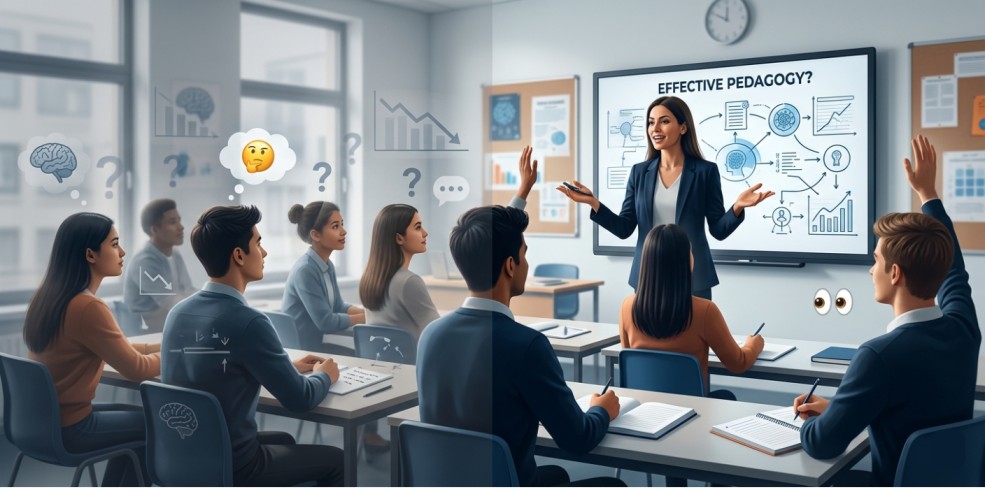
A quiet classroom often looks like a successful classroom. Students facing the board listening carefully and writing notes give a strong impression of discipline and focus. But attention does not always mean understanding
Many students learn to behave in ways that meet expectations. They nod when teachers ask questions copy answers and avoid asking doubts to maintain the flow of the class. This creates a surface level engagement that looks positive but may not lead to deep learning
- Students memorise without understanding concepts
- They hesitate to ask questions due to fear of judgement
- They focus on completing tasks rather than learning skills
- They depend on tuition instead of classroom clarity
This is where teaching becomes performance. It looks effective but does not reach the student fully
Why Teaching Becomes Performance
The pressure on teachers is real. They must complete syllabus manage classrooms prepare students for exams and satisfy school expectations. With limited time and high expectations teaching can become a structured routine instead of a responsive process
In such situations teachers may focus on delivering content smoothly rather than checking if every student has understood. The goal shifts from learning to completion
This is not a failure of teachers. It is a system level challenge. When success is measured by syllabus completion and marks teaching naturally becomes performance driven
Common Signs Teaching Is Not Reaching
- Students perform well in class tests but struggle in application based questions
- High dependence on coaching outside school
- Students forget concepts quickly after exams
- Low curiosity and limited classroom discussions
These signs indicate that learning is not deeply rooted
The Real Impact on Students in Classes Eight to Ten
This stage is critical for building strong foundations. Students start thinking about careers and subject choices. If learning remains surface level they may feel confused about their strengths and interests
Parents often see this as lack of focus or discipline. But the issue may be deeper. When teaching does not reach students they lose confidence and rely on memorisation instead of understanding
Over time this affects decision making. Students choose streams based on marks rather than true ability
Why Parents Should Look Beyond Marks
Marks are important but they do not always reflect true learning. A student scoring well may still lack conceptual clarity. Parents who only focus on results may miss early signs of learning gaps
Instead parents can ask simple questions at home
- Can my child explain the concept in their own words
- Can they apply what they learned to real life situations
- Do they ask questions or just memorise answers
These indicators give a clearer picture of actual learning
How Schools Can Shift from Performance to Real Learning
Schools can make small but powerful changes to ensure teaching truly reaches students. The focus should move from completing content to ensuring understanding
- Encourage interactive teaching instead of one way explanation
- Use regular feedback to check understanding
- Create safe spaces where students can ask doubts freely
- Focus on application based learning rather than memorisation
These steps create classrooms where learning becomes active and meaningful

Role of Technology in Bridging the Gap
Technology can support teachers in understanding student learning patterns. Tools like smart assessments help identify gaps early while AI based insights provide clear understanding of student strengths and weaknesses
Students can also explore doubts through AI learning support which reduces hesitation in asking questions
Career clarity tools such as expert career guidance and career exploration platforms help students connect learning with future goals
When used correctly technology reduces guesswork and supports personalised learning
Understanding the Personalised Learning Gap
Many schools talk about personalised learning but struggle to implement it. Large class sizes and time constraints make it difficult to focus on each student individually
This creates a gap between promise and reality. More insights on this challenge can be explored in this detailed analysis on personalised learning
Closing this gap requires a mix of teacher support smart tools and realistic expectations
Global Research on Learning vs Engagement
Studies by organisations like OECD highlight that student engagement alone does not guarantee learning outcomes. Deep learning requires active thinking problem solving and feedback
This reinforces the idea that visible attention is not enough. True learning happens when students process and apply knowledge
What Career Counsellors Can Do
Career counsellors play a key role in identifying whether students are learning deeply or just performing academically. They can guide students to explore strengths beyond marks
- Use assessments to identify real interests
- Encourage exploration of multiple career paths
- Help students connect subjects with real world applications
This ensures that career decisions are based on understanding not just performance
Building Classrooms Where Teaching Truly Reaches
For teaching to reach students classrooms must move beyond routine delivery. Teachers need time support and tools to focus on student understanding
Parents need to value learning over marks and students need to feel safe to express confusion
When all stakeholders work together classrooms transform from performance spaces to learning environments
A Simple Shift That Changes Everything
Instead of asking did the teacher finish the lesson we should ask did the student understand the lesson. This small shift changes how we view education
It moves the focus from teaching as an activity to learning as an outcome
Have you noticed this gap between attention and real learning in your school or home Share your thoughts and experiences and explore more insights to build stronger learning outcomes for students