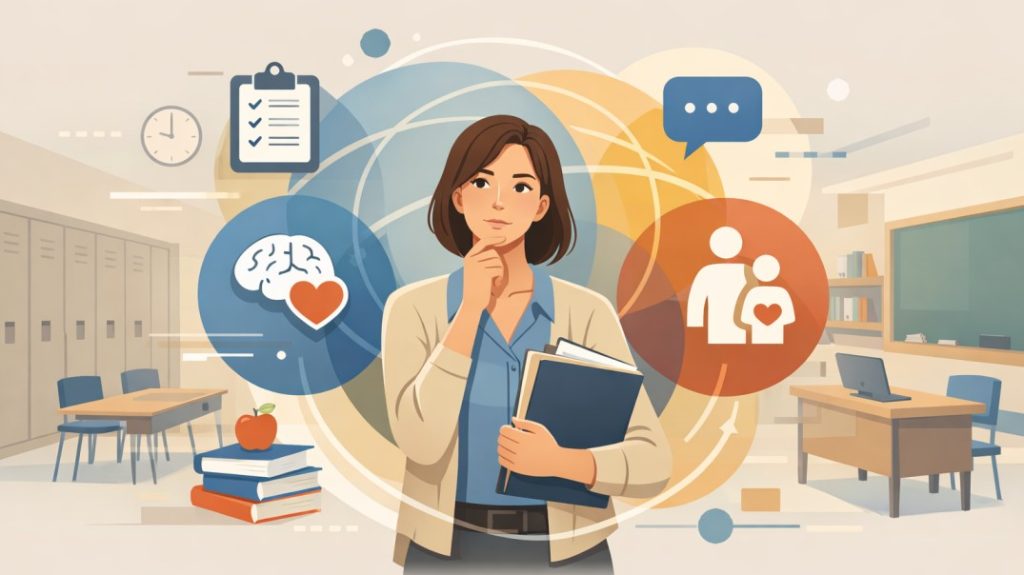
From Role Expansion to Role Confusion How Modern Schools Blur Professional Boundaries for Educators
In many Indian schools the role of a teacher has quietly expanded far beyond classroom teaching. Parents see educators guiding careers handling emotional issues managing events and answering messages late into the night. What looks like dedication is often a sign of role confusion. This research based article explains how modern school systems blur professional boundaries for educators and why this matters for students in Classes Eight to Ten.
What Role Expansion Really Means in Schools
Role expansion happens when one job slowly absorbs the responsibilities of many others. Teachers today are not only subject experts. They are also counsellors data managers technology guides and sometimes family mediators.
In Indian education this change has grown quickly because schools want to offer complete support to students. The intention is positive but the structure is unclear. When boundaries are not defined teachers carry emotional and administrative work without training or time.
- Academic teaching and exam preparation
- Emotional support and motivation
- Parent communication and reporting
- Event planning and supervision
- Technology and data entry tasks
This mixture creates a role that is wide but not deep. Teachers know what to do but not where their responsibility ends.
When Expansion Turns Into Confusion
Role confusion begins when expectations are high but definitions are weak. A teacher may be asked to guide career choices without being a trained counsellor. Another may manage emotional conflicts without mental health support.
Parents often expect instant replies and personalised guidance. School management expects results and documentation. Students expect understanding and flexibility. These demands pull educators in different directions.
International studies from organisations such as OECD show that unclear professional boundaries increase stress and reduce teaching quality. When educators are unsure of their role they spend energy deciding what to prioritise instead of focusing on learning.
Why This Matters for Students in Classes Eight to Ten
Students in Classes Eight to Ten are forming study habits and future goals. They look to teachers for stability and guidance. When educators are stretched thin they may appear rushed or distant even when they care deeply.
This can affect how students view learning. They may feel pressure instead of support. Parents may notice children becoming anxious about marks and approval.
Related research on emotional pressure in schools is explored in this article on how students internalise pressure.
How Indian Parents Experience This Shift
Many Indian parents see teachers as trusted guides. They approach them for academic advice emotional reassurance and career direction. This trust is valuable but it also increases load on educators.
Parents worry about board exams competition and future security. They want quick answers and strong guidance. When teachers try to meet all these needs without systems the result is silent overload.
A healthier model supports both sides. Parents receive structured guidance and teachers receive defined roles and tools.
Professional Boundaries Are Not Lack of Care
Some fear that setting boundaries means reducing support. In reality boundaries protect quality. When teachers know their main role is teaching and guided mentoring they can do it well.
Specialised support such as career counselling and emotional guidance should come from trained resources. This is where structured platforms and experts help without replacing teachers.
For example tools like student assessment systems and AI based insights reduce decision fatigue and help educators focus on teaching.
Technology Can Reduce Role Confusion When Used Wisely
Digital tools often add tasks instead of removing them. But when designed for guidance they can simplify roles.
Career guidance platforms such as career option libraries and access to career experts allow teachers to guide without carrying full responsibility alone.
Support systems like educational chat tools answer common student questions and reduce emotional dependence on individual teachers.
The Cost of Blurred Boundaries on School Culture
When roles are unclear school culture becomes reactive. Teachers respond to crises instead of planning growth. Students learn to seek constant approval. Parents become anxious partners rather than confident supporters.
This affects long term trust. Education begins to feel like constant monitoring rather than development.
Clear boundaries allow everyone to know their part. Teachers teach. Counsellors guide. Parents support. Students learn.
What Principals and School Leaders Can Do
Leadership sets the tone for role clarity. Principals can redesign workloads and expectations without increasing budgets.
- Define teaching hours separate from counselling time
- Create referral systems for emotional and career guidance
- Limit non academic duties during exam periods
- Train staff in role boundaries and communication
These steps protect professional identity and improve student experience.

How Career Counsellors Fit Into This Picture
Career counsellors act as bridge figures. They translate student interests into structured choices. When schools use counsellors effectively teachers are freed from making life shaping decisions alone.
This partnership improves accuracy and reduces emotional burden. Students receive specialised advice while teachers stay focused on learning guidance.
What Parents Can Do to Respect Professional Boundaries
Parents can help by understanding that teachers are not full time counsellors or family advisors. Respecting time and scope protects relationships.
- Use school counselling channels for career guidance
- Avoid late night academic messages
- Support independence in children
- Trust structured systems instead of personal pressure
This creates healthier interaction and less confusion.
Connecting Role Clarity to Student Motivation
When teachers focus on teaching and students focus on learning pressure reduces. Motivation becomes internal rather than fear driven.
Students feel supported without being constantly judged. This improves curiosity and confidence especially in middle school years.
A Healthier Design for Modern Education
Role expansion is not wrong. Role confusion is. Schools need to separate emotional guidance career support and academic teaching into clear channels.
With structured systems and respectful communication teachers regain professional identity. Parents gain clarity. Students gain stability.
Education becomes a shared journey instead of an emotional overload.
How do you think schools can balance teacher roles and student support Share this article with your school community and explore more research based insights to create clearer and healthier learning environments.