

The Hidden Cognitive Work Teachers Perform During Every Classroom Session
When parents think about teaching they often imagine explaining lessons writing on the board and checking homework. However the reality inside a classroom is far more complex. Teachers constantly perform hidden cognitive work in classrooms that most people never see. Every minute they observe student reactions adjust explanations manage behaviour and make quick decisions that shape learning.
For parents principals teachers and career counsellors in India this invisible mental effort is important to understand. It explains why teaching requires intense concentration even when a class appears calm and routine. It also shows why supporting teachers with the right tools and systems can improve student learning especially for Classes Eight Nine and Ten when students begin exploring their academic and career interests.
What Is Hidden Cognitive Work in Classrooms
The phrase hidden cognitive work in classrooms refers to the mental effort teachers use to monitor and guide learning while teaching. Unlike visible tasks such as writing notes on the board this work happens inside the teacher mind.
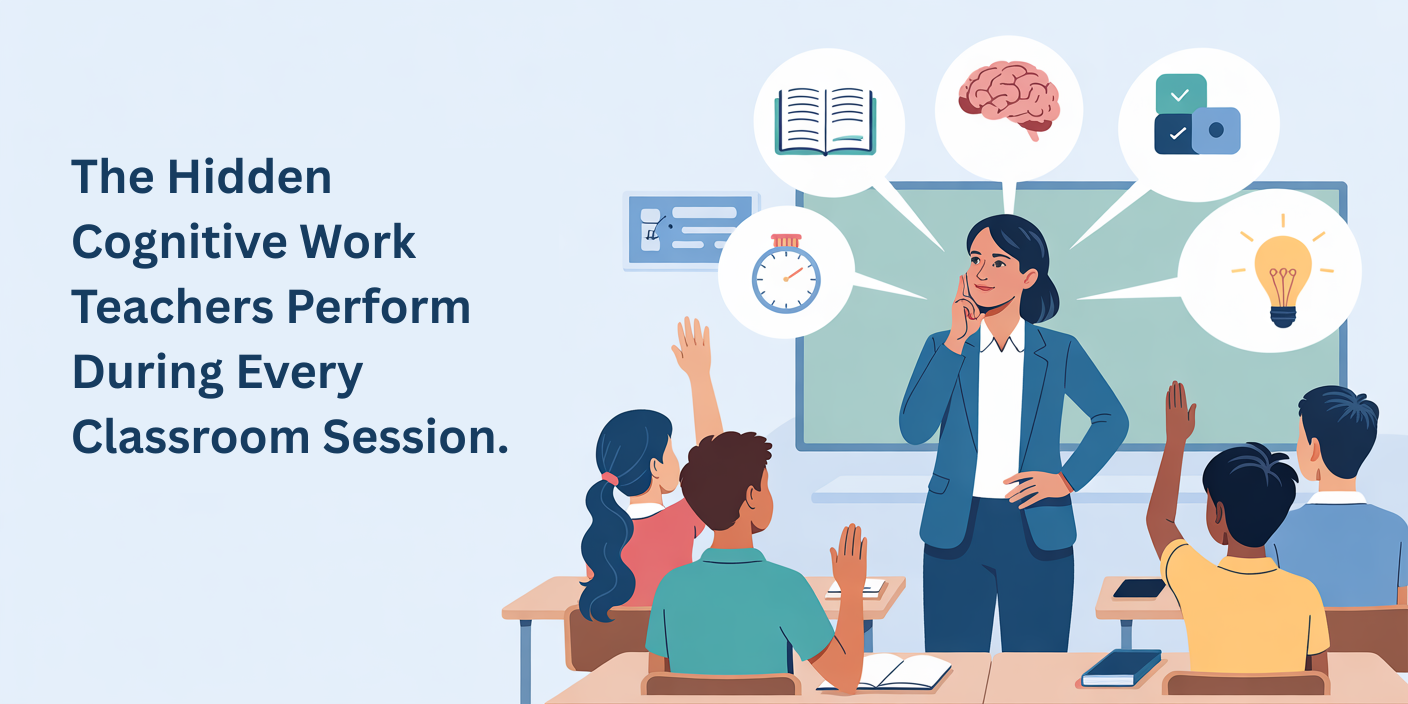
During a single lesson a teacher may think about several things at the same time. They are observing which students understand the topic adjusting explanations for different learning speeds and ensuring discipline without interrupting the lesson flow.
According to research from OECD education research teaching involves continuous decision making where educators analyse student feedback and adapt strategies instantly. This cognitive effort explains why teaching demands both intellectual and emotional energy.
A Typical Classroom Session Is Full of Mental Decisions
Imagine a mathematics teacher explaining algebra to a class of forty students. While writing formulas the teacher is also watching facial expressions. Some students look confident while others appear confused.
Within seconds the teacher must decide whether to continue the explanation or repeat the concept in a simpler way. This is an example of hidden cognitive work in classrooms.
Teachers make dozens of such decisions during every session. These mental processes often include
- Observing student engagement and attention
- Adapting explanations to different learning levels
- Managing time to finish the syllabus
- Maintaining discipline without discouraging curiosity
- Connecting topics with real life examples
All these decisions happen while the lesson continues smoothly. Most parents and students never notice this invisible effort.
Why This Cognitive Work Matters for Students in Classes Eight to Ten
Middle school and early secondary education shape the future learning path of students. In India Classes Eight Nine and Ten are important stages where students begin thinking about careers science streams commerce options and skill development.
Teachers use hidden cognitive work in classrooms to guide students through these transitions. For example when a teacher notices a student asking thoughtful questions they may encourage deeper exploration. When another student struggles with confidence the teacher may adjust feedback to build motivation.
This mental observation helps identify strengths that parents may not see at home. It is often the first step in helping students discover their interests.
The Mental Load Teachers Carry During a Lesson
While students focus on understanding a topic teachers manage a large mental checklist. This includes both academic and emotional elements.
Some of the cognitive responsibilities teachers handle simultaneously include
- Tracking progress of each student
- Remembering which concept was difficult in previous classes
- Balancing syllabus completion with concept clarity
- Handling disruptions without losing lesson flow
- Encouraging shy students to participate
This continuous monitoring is the essence of hidden cognitive work in classrooms. It requires strong focus and quick thinking.
Why Parents Often Do Not Notice This Effort
Parents usually judge classroom learning through test scores and homework results. While these outcomes are important they only show the final result of the teaching process.
The daily thinking and planning teachers perform often remain invisible. For example a teacher may change an entire lesson approach because they sense students are losing interest. This decision might help students understand the topic better but the effort behind it is rarely recognised.
Understanding this invisible effort can help parents appreciate the complexity of teaching and support educators more effectively.
Technology Can Reduce Hidden Cognitive Work in Classrooms
Modern education technology can help teachers reduce repetitive mental tasks. Instead of spending hours analysing student performance manually teachers can use smart systems that provide quick insights.
For example digital evaluation platforms such as student assessment tools help teachers understand strengths and learning gaps quickly. This allows them to focus more on teaching and mentoring.
Similarly intelligent data systems like AI driven education insights can analyse patterns in student performance. These insights support teachers in guiding students toward suitable academic paths.
Support tools such as AI chat assistance also help answer routine queries from students which reduces pressure on teachers.
How Career Counselling Connects With Classroom Observation
Teachers often notice talents long before formal career guidance begins. Their daily observations form a valuable foundation for career counselling.
For instance a science teacher may observe that a student enjoys solving logical problems. Another student may show creativity in presentations or storytelling.
These insights become powerful when combined with structured career exploration resources like career exploration lists and guidance from professional career experts.
Together they help students connect classroom learning with real world opportunities.
Challenges Indian Teachers Face While Managing Cognitive Work
In many Indian schools teachers manage large classrooms with diverse learning levels. This increases the mental effort required during each session.
Some common challenges include
- Large student teacher ratios
- Pressure to complete the syllabus quickly
- Limited planning time between classes
- Administrative duties beyond teaching
These pressures make hidden cognitive work in classrooms even more demanding. Supporting teachers with better systems and technology can help reduce this burden.
Why School Leaders Should Recognize This Invisible Work
Principals and school leaders play a crucial role in acknowledging the mental effort teachers invest daily. When schools recognise this cognitive work they can design schedules training and support systems that protect teacher wellbeing.
Encouraging innovation in teaching methods is also important. Educational discussions around innovation in schools and academic calendar challenges highlight how rigid structures sometimes limit teacher creativity.
Flexible systems allow teachers to apply their cognitive skills more effectively which benefits students as well.
Building Strong Partnerships Between Parents and Teachers
When parents understand hidden cognitive work in classrooms they begin to see teachers as learning partners rather than only instructors.
Parents can support this partnership by
- Encouraging children to respect teacher guidance
- Discussing learning experiences not only exam marks
- Communicating openly with teachers about student interests
- Supporting career exploration conversations at home
These small steps strengthen the relationship between families and schools which ultimately benefits students.
Looking Ahead The Future of Teaching and Learning
Education is evolving rapidly with digital tools artificial intelligence and new career pathways. Yet one element remains constant the teacher ability to observe understand and guide students.
The hidden cognitive work in classrooms will always be at the heart of effective learning. Technology can support this process but it cannot replace the human insight teachers bring to every lesson.
Recognising this invisible effort allows schools parents and counsellors to build systems that empower teachers rather than overload them.
If this research based article helped you understand the invisible effort teachers make every day share it with educators and parents in your network and explore more learning insights that support student growth and career discovery.