
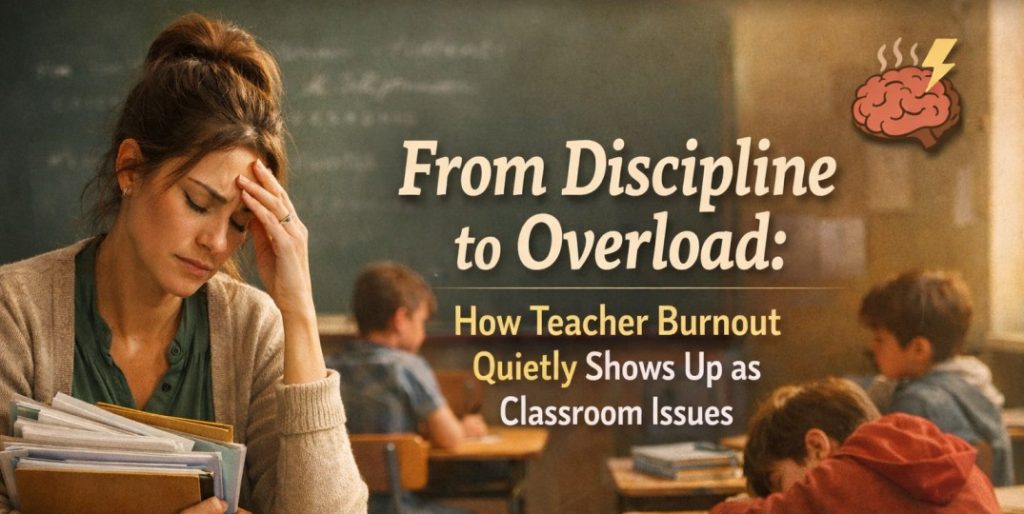
From Discipline to Overload How Teacher Burnout Quietly Shows Up as Classroom Issues
In schools across India teachers are often praised for discipline and control in classrooms but behind the calm surface many educators experience quiet burnout. Parents principals and career counsellors notice classroom issues but rarely connect them to teacher fatigue and overload. This article explores how burnout subtly impacts teaching performance and student experience in Classes 8 to 10 and what can be done to address it.
Understanding Teacher Burnout
Teacher burnout is not always obvious. It does not only appear as anger or frustration. Often it shows as consistent tiredness low enthusiasm and subtle changes in classroom management. Educators manage multiple responsibilities simultaneously including lesson planning grading student behaviour communicating with parents and administrative tasks. Over time this workload can become overwhelming.
Even when teachers maintain discipline students may sense decreased energy and engagement. This can manifest as lower participation, incomplete assignments and increased classroom distractions.
How Burnout Shows Up as Classroom Issues
Burnout impacts teaching in ways that are not immediately obvious. Parents and principals often notice the effects before the teacher does. Some common signs include:
- Reduced patience during classroom interactions
- Less creativity in lesson delivery
- More reliance on strict rules to manage behaviour
- Avoidance of one-on-one student support
- Inconsistent feedback on student work
These classroom issues can unintentionally affect student motivation and learning outcomes, creating a cycle where teachers feel more pressure and students feel less engaged.
The Role of Job Design in Burnout
Many schools unknowingly design jobs that contribute to burnout. Teachers juggle multiple cognitive and emotional tasks without structured support. A single teacher may handle academic instruction, student emotional guidance, administrative duties and parental communication all in one day. This constant switching between tasks increases mental load and fatigue.
Research shows that when workload is misaligned with emotional resources teachers are more likely to experience exhaustion even if they love their profession. Outbound studies on teacher workload and wellbeing confirm this pattern globally.
Connecting Teacher Wellbeing to Student Performance
Students in Classes 8 to 10 are at a critical stage of academic and personal development. Teacher burnout can affect them in subtle ways. For instance when a teacher has low energy they may deliver lessons in a less engaging manner. This can reduce curiosity and enthusiasm for learning.
Additionally, stressed teachers may unintentionally transfer their emotional strain to students. This can manifest as classroom tension, increased anxiety, and reduced collaborative learning.
Signs Indian Parents Should Watch
Parents often notice changes in their child’s behaviour but may not connect it to teacher stress. Some signs to watch for include:
- Child expressing anxiety about classes or homework
- Loss of motivation for subjects previously enjoyed
- Increased complaints about classroom rules or strictness
- Reluctance to participate in discussions or group work
Understanding these signs can help parents engage in constructive communication with schools instead of blaming students for performance gaps.
Strategies to Reduce Teacher Burnout
Addressing burnout requires systemic change and individual support. Schools can implement several strategies:
- Distribute administrative duties to prevent overload
- Provide dedicated planning periods for lesson preparation
- Encourage peer support and team teaching for challenging classes
- Limit after hours communication except for urgent matters
- Use AI tools for repetitive tasks such as grading and assessment like AI assessment platforms
Such measures free teachers to focus on student interaction and creative lesson delivery.

Role of Principals and Career Counsellors
Principals and career counsellors can actively prevent teacher burnout by promoting a supportive environment. For example:
- Regular wellbeing check-ins with teachers
- Access to professional guidance via career experts
- Implementing AI insights to monitor teacher workload and student progress through AI driven insights
- Providing resources like educational chat support for quick problem solving
These measures reduce emotional pressure and improve overall classroom experience.
Balancing Discipline and Emotional Energy
Discipline in classrooms is essential but must be balanced with teacher emotional health. Strict rules alone cannot compensate for a teacher who is emotionally exhausted. Schools that combine structured discipline with supportive teaching practices help students thrive while maintaining teacher wellbeing.
Platforms like career option libraries and guided assessments allow students to explore interests while teachers maintain energy for meaningful instruction.
Long Term Consequences of Ignoring Burnout
Ignoring teacher burnout can lead to turnover, reduced quality of education, and decreased student engagement. Over time schools may notice more classroom issues, absenteeism, and lower overall performance. Addressing burnout early protects both teachers and students.
For deeper insights into structural challenges in teaching careers read this research based article.
Creating a Sustainable Teaching Environment
Teacher burnout quietly shows up as classroom issues but can be addressed with thoughtful design. Reducing overload implementing AI tools, distributing responsibilities and providing emotional support ensures classrooms remain productive and engaging for students in Classes 8 to 10.
How does your school support teacher wellbeing Share your strategies in the comments and explore more research driven insights to create healthier classrooms for students and teachers alike.