
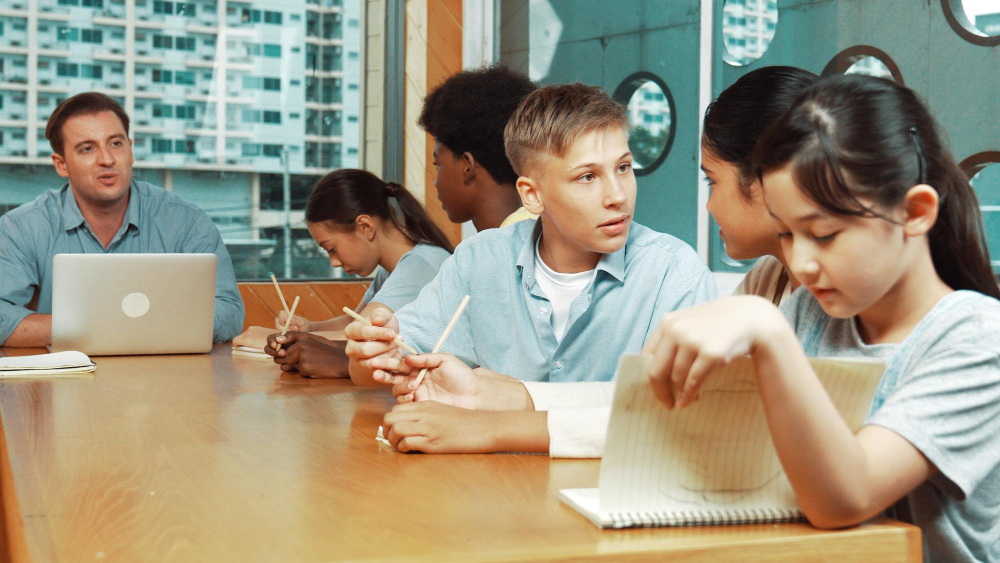
Emotional Safety in Classrooms The Hidden Foundation of Effective Learning
In many Indian classrooms success is often measured through marks ranks and visible performance. Yet parents and teachers frequently sense something deeper. A student may score well but feel anxious unheard or afraid to make mistakes. Another may struggle not because of ability but because the classroom does not feel emotionally safe. Research across education psychology now confirms a powerful truth. Emotional safety in classrooms is the invisible foundation on which real learning curiosity and confidence are built.
For students in Classes eight to ten these years are especially sensitive. Adolescence brings identity questions peer pressure and fear of judgement. When emotional safety is missing learning becomes mechanical. When it is present students engage think deeply and grow with resilience.
What Emotional Safety Really Means in a Classroom
Emotional safety does not mean removing discipline or lowering standards. It means creating an environment where students feel respected valued and safe to express themselves without fear of ridicule or punishment.
In emotionally safe classrooms students believe three things
- It is safe to ask questions even if they sound basic
- Making mistakes is part of learning not a reason for shame
- Teachers notice effort not just outcomes
This sense of security directly affects how the brain processes information. When students feel threatened the brain shifts into survival mode. Memory focus and reasoning drop. When students feel safe the brain opens up to learning exploration and decision making.
Why Emotional Safety Matters More Than Ever for Indian Teens
Indian students today face intense expectations from early ages. Board exams competitive entrances comparison with peers and family pressure often dominate daily conversations. Parents want stability and good career options. Teachers want results. Students often internalize fear of failure.
This is where emotional safety becomes critical. Studies in neuroscience show that chronic stress reduces working memory and attention. In practical terms a stressed student studies more hours but retains less.
Parents often say My child knows the answer at home but freezes in class or exams. Teachers notice bright students going silent. These are not motivation issues. These are emotional safety gaps.
The Science Behind Emotional Safety and Learning
The human brain learns best when it feels safe. The amygdala is the part of the brain that detects threat. When it senses danger real or perceived it blocks access to the prefrontal cortex where thinking reasoning and planning happen.
Classrooms that rely heavily on fear based motivation trigger this threat response. Public scolding sarcasm constant comparison and exam only validation keep the brain in alert mode.
On the other hand emotionally safe classrooms activate curiosity pathways. Dopamine supports engagement. Memory consolidation improves. Decision making becomes clearer. This is why emotional safety is not a soft concept but a performance multiplier.
Global education research bodies such as UNESCO education research highlight social emotional learning as essential for academic success not optional.
Common Classroom Practices That Reduce Emotional Safety
Many well intentioned practices unintentionally reduce emotional safety especially during middle and secondary school years
- Publicly ranking students frequently
- Calling out mistakes in front of peers
- Labeling students as weak average or topper
- Rewarding only final marks not learning effort
- Ignoring quiet students who do not demand attention
Over time students learn to play safe rather than think deeply. They memorize rather than explore. Confidence slowly erodes even among high performers a pattern explained further in this research based article.
What Emotionally Safe Classrooms Look Like in Practice
Emotionally safe classrooms are not silent or rigid. They are structured yet flexible focused yet humane.
Teachers Normalize Struggle
Teachers openly acknowledge that learning involves confusion. When a teacher says This question is tricky many students struggle with it the fear reduces instantly.
Mistakes Are Treated as Information
Instead of Why did you get this wrong the language shifts to What can we learn from this response. This simple change rewires student mindset.
Multiple Ways to Participate Are Allowed
Not every student thinks aloud quickly. Some write better some reflect longer. Emotionally safe classrooms value different expression styles.
Effort Is Visible and Appreciated
Students who show improvement receive recognition even if they are not top scorers. This builds internal motivation.

Role of Parents in Building Emotional Safety Beyond School
Emotional safety does not stop at the classroom door. Parents play a powerful role especially during adolescence.
- Separate marks from self worth in conversations
- Ask what did you learn today instead of what did you score
- Listen without immediately fixing or judging
- Share stories of your own learning struggles
When home and school both provide safety students develop stronger confidence and decision making skills which later impact career clarity.
How Technology Can Support Emotional Safety When Used Right
EdTech when designed thoughtfully can enhance emotional safety. Adaptive assessments reduce comparison. Private feedback tools protect dignity. AI driven insights help teachers understand hidden struggles early.
Platforms like student assessment tools allow students to explore strengths without fear of judgement. AI based guidance such as career and learning chat support gives students a safe space to ask questions they may hesitate to ask adults.
Career counselors using AI insights can spot anxiety patterns confidence gaps and decision blocks early before they affect academic and career paths.
Emotional Safety and Career Development Are Deeply Connected
Students who grow up in emotionally safe environments make better career decisions later. They explore career options openly ask questions and reflect honestly on interests.
Those who grow up under constant fear tend to choose safe careers based on approval rather than alignment. This often leads to dissatisfaction even after academic success.
This is why modern career guidance increasingly focuses on emotional readiness along with aptitude. Tools like career expert guidance and structured exploration through career role discovery work best when students feel emotionally secure.
What School Leaders Can Do Starting This Academic Year
Principals and school leaders shape emotional culture through daily signals
- Train teachers on emotional safety awareness
- Review assessment language and feedback styles
- Encourage mentoring check ins beyond academics
- Use data not to rank but to support students
- Create forums where students feel heard
Schools that invest in emotional safety see long term benefits improved engagement reduced discipline issues and stronger parent trust.
The Quiet Shift That Changes Everything
Emotional safety does not announce itself loudly. It shows up quietly in classrooms where students raise hands without fear where teachers listen deeply and where learning feels human.
In a world focused on performance emotional safety may feel invisible. Yet it is the hidden foundation of effective learning confident decision making and meaningful career growth.
If this perspective resonated with you share it with a teacher parent or school leader and explore more insights that help students grow with confidence and clarity.