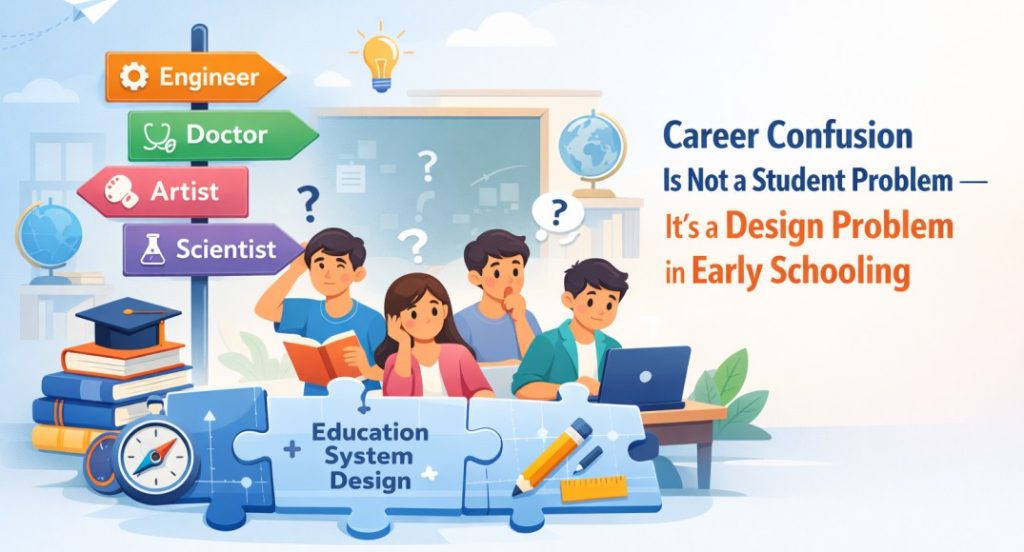
Career Confusion Is Not a Student Problem It Is a Design Problem in Early Schooling
Many parents in India notice that their children reach Class Eight or Nine with little clarity about what they enjoy learning or what kind of work they might like in the future. This is often called career confusion. Students are blamed for being careless or distracted. Teachers feel frustrated that children do not show direction. Principals worry about results and reputation. But research and classroom experience suggest something deeper. Career confusion is not a personal failure. It is a design problem created in the early years of schooling.
This article explains how the structure of early education shapes student thinking and why confusion appears later. It connects this issue to the daily struggles of Indian families and educators and offers practical ways to redesign learning so children grow with purpose instead of pressure.
What Career Confusion Really Looks Like in Indian Schools
In many classrooms students can solve equations and memorise facts but cannot answer simple questions like what subjects they enjoy or what skills they are good at. Parents often say their child is good in studies but does not know what to choose after Class Ten.
This confusion shows up in several ways.
- Students copy friends choices instead of exploring their own interests
- Children fear selecting streams because they do not understand them
- Parents depend on marks alone to guide decisions
- Teachers feel students lack long term motivation
These patterns are not accidental. They grow from how learning is designed from the primary years onward.
How Early Schooling Shapes Thinking About the Future
From a young age children learn that school success means scoring well and obeying rules. Curiosity and self discovery receive less attention than syllabus completion. Over time students stop asking what they like and start asking what will be on the test.
When identity is built around marks children do not develop language for interests or strengths. They only learn ranking. By the time career decisions arrive they have no inner map to guide them.
Studies from education research groups such as OECD show that students who connect learning with real life roles early feel more confident in later choices. Systems that delay exposure to careers create anxiety and guesswork.
Why This Is a Design Problem Not a Motivation Problem
Adults often say children lack seriousness. In reality the system rarely gives them tools to think about themselves. There is little structured time for reflection or exploration.
School design focuses on subjects not on self understanding. Timetables reward memory more than meaning. Career ideas appear suddenly in Class Nine or Ten when emotional pressure is already high.
This sudden demand to choose without preparation creates confusion. It is like asking someone to pick a destination without ever showing them a map.

Signs of Design Gaps in Early Schooling
- No regular activities for interest discovery
- Little discussion about real world work
- Learning separated from practical meaning
- Career guidance treated as a one time event
These gaps slowly build uncertainty inside students.
The Emotional Cost for Students and Families
When career confusion appears parents worry about future security. Students feel fear of making wrong choices. Teachers struggle to advise without tools. This creates emotional pressure on all sides.
In Indian households education is tied to family pride and stability. When a child cannot decide parents feel helpless. They may push science or commerce because these seem safe. The child may follow without confidence.
This pressure cycle can reduce motivation. Learning becomes about survival not growth.
Why Early Exposure Matters More Than Late Guidance
Career awareness should not start in Class Ten. It should begin when children start asking why they study. Simple activities can help them notice what excites them.
Exposure does not mean forcing career decisions. It means showing how subjects connect to real roles. It means helping students name their strengths and interests.
Schools that introduce reflection early see students make calmer choices later. They develop inner clarity instead of panic driven decisions.
How Schools Can Redesign Learning for Clarity
Redesign does not require extra burden. It requires shifting focus slightly from marks to meaning.
- Include projects that connect subjects with real life roles
- Allow students to talk about what they enjoy learning
- Create space for guided self reflection
- Introduce simple career awareness activities
These changes slowly build decision confidence.
How Technology Can Support Better Design
Digital tools can reduce guesswork by giving structured insight into student interests and skills. Platforms such as student assessment tools and AI based insights help schools understand learners beyond marks.
Interactive guidance through career support systems and access to career experts can share responsibility instead of placing it only on teachers.
Exploration resources like career option libraries help students see the variety of futures available.
The Role of Parents in Reducing Confusion
Parents shape how children view success. When parents talk only about marks children think marks equal worth. When parents talk about effort and interests children feel safer to explore.
Helpful actions include listening without judgement and encouraging curiosity rather than quick decisions.
- Ask children what they enjoy not only what they scored
- Share different career stories not only popular ones
- Support exploration instead of forcing certainty
This builds emotional security around choices.
Principals and Counsellors as System Designers
Leaders decide priorities. When career thinking is part of everyday learning students grow with awareness. Counsellors who work with data and reflection rather than only marks give better guidance.
Related ideas on how false personalization affects learning are explored in this research based article on personalization myths.
From Confusion to Direction Through Better Design
Career confusion appears when children are asked to choose without knowing themselves. This is created by early schooling that values results over reflection.
By redesigning learning to include awareness curiosity and real world links schools can prepare students long before decisions arrive. Parents and educators together can replace fear with understanding.
When systems change children do not need to guess their future. They grow into it.
What changes would you like to see in early schooling to help children gain clarity about their future Share this article with your school community and explore more insights to build learning systems that guide students with confidence.